As I made my way across the cafe, several patrons gave me curious, disapproving glances. There were plenty of empty tables and chairs to choose from, yet something about the wooden chair beside her seemed to call to me.
I set my drink and muffin down on the table, and that’s when I noticed the pile of worn, dirty bags stacked beside her, each stuffed with her belongings. A piece of folded cardboard peeked out from the top of a bag resting on the floor next to her. She seemed to be carrying her entire life with her, and yet she sat there calmly, almost quietly, as if waiting for someone to notice.
Almost immediately after I sat down, she looked up at me and asked, “Have you seen any phone books anywhere?”
Her face was striking. She was missing half her front teeth, and her white-and-gray hair stood up in wild, spiky tufts. Her clothes were tattered, and her blankets were threadbare, but her eyes were clear, alert, and unexpectedly vivid.
“Hmmm… it’s been a while,” I said. “I can’t say I’ve seen any recently.”
She pursed her lips thoughtfully, tilting her head from side to side. “Wouldn’t AT&T have them? Is that what they call them now? Do you know where they are? Can you look them up on your phone?”
I nodded. “Yes, you’re right. Pacific Bell made them, and they’re now AT&T. I can look up the closest location for you.”
By now, a few of the cafe’s patrons had started watching our conversation. I even overheard a young girl whisper to her friend, “That girl’s going to wish she didn’t sit there by that nasty homeless chick.”
I pulled up Google and began typing. “Now, just so you know, I don’t think they actually carry phone books in their stores,” I said. But she shook her head. “I just need the address,” she insisted.
“If you really want to look through one, the libraries usually have them,” I suggested.
Her body shivered slightly, and she drew the nylon blanket covering her legs up to her waist. “Can you give me the address to the closest library?”
I took a sip of my coffee and searched quickly. Moments later, I found one nearby. “Here’s a library at Larkin and Hyde, right across from the Civic Center. It’s open until 8 PM.”
She pulled out a small notepad and carefully wrote down the information. “Great. Thank you for helping me, young lady,” she said, her eyes glistening with appreciation.
“Of course,” I replied. “Take your time exploring it. It’s a beautiful library with amazing architecture.”
“That’s wonderful,” she said softly. “I love libraries.”
She returned to her little notepad, filling the pages with loops, curlicues, squares, and abstract shapes. I watched quietly, looking out the window at the city’s bustling sidewalks. People of all ages, colors, and faiths wove through the streets—the young, the old, the wealthy, the destitute, the Christians, the Muslims—each moving to their own rhythm yet sharing the same space.
It struck me how fear often keeps us from connecting with those who appear different. Someone might dress differently, worship differently, speak differently, or live differently—and we hesitate. But the truth is, we’re all part of the same human family.
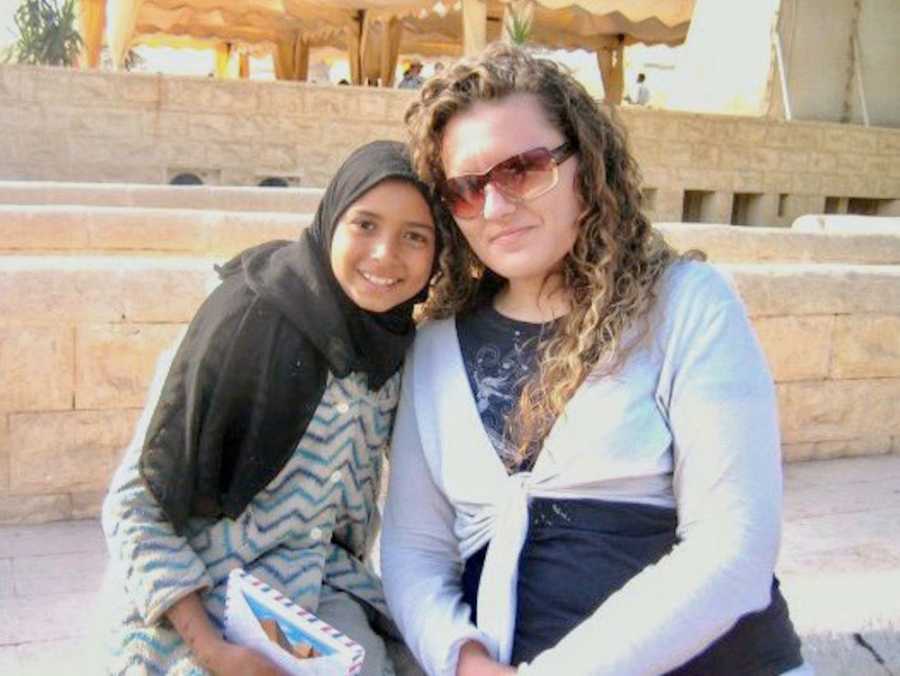
The teenager with the mohawk and tattoos. The woman in a black hijab and flowing abaya. The elderly man muttering as he paces. The young woman in a wheelchair at the crosswalk. The homeless woman quietly seeking shelter in a coffee shop.
Every single one of us is worthy of dignity, connection, and care.
Today, I challenge you to reach out. Share a smile. Strike up a conversation. Offer a hand. Even the smallest act can remind us of our shared humanity. Because beneath the surface of our differences, you might just discover that we’re far more alike than we think.