
Smart. That was the first word people used when they met my son, Aiden. Precocious, funny, confident, and yes, undeniably smart. He loved nature and animals, often asking questions about adaptations or the impact of habitat destruction that left adults scrambling for answers. Every day brought new wonder, new curiosity, new eagerness to learn. I was sure he was going to love kindergarten.

Let me take a step back: I’m a special education teacher. Literacy has always been at the heart of our household, and Aiden adored books. Bright, healthy, happy—he was everything I could have hoped for in a kindergarten-ready child. I was ready to wow the teachers with this prepared little scholar. After all, I’d trained my whole life for this.
But things didn’t unfold as I imagined.
I started volunteering weekly in Aiden’s kindergarten class and quickly noticed that despite his brilliance, he struggled in ways his classmates didn’t. And sadly, he noticed too.
We sprang into action, practicing sight words tirelessly. I remember him staring at the word the, tapping his temple and whispering to himself:
“Oooohhhh—I know this. It’s a digraph, but which one is it?”
Yes, my five-year-old could analyze letter clusters and identify digraphs but couldn’t read the word the. I was confused. At times, I wondered if he was being silly. When rhyming, he might say bat rhymes with bed, or dog rhymes with kitten. He had to recite the alphabet in his head just to recall letters and frequently reversed them—even in his own name.
Yet his comprehension was remarkable. At bedtime, he could explain the difference between fiction and nonfiction, even pointing out the tricky category of realistic fiction. He displayed moments of brilliance that revealed his understanding of complex concepts, even when the basics of reading eluded him.
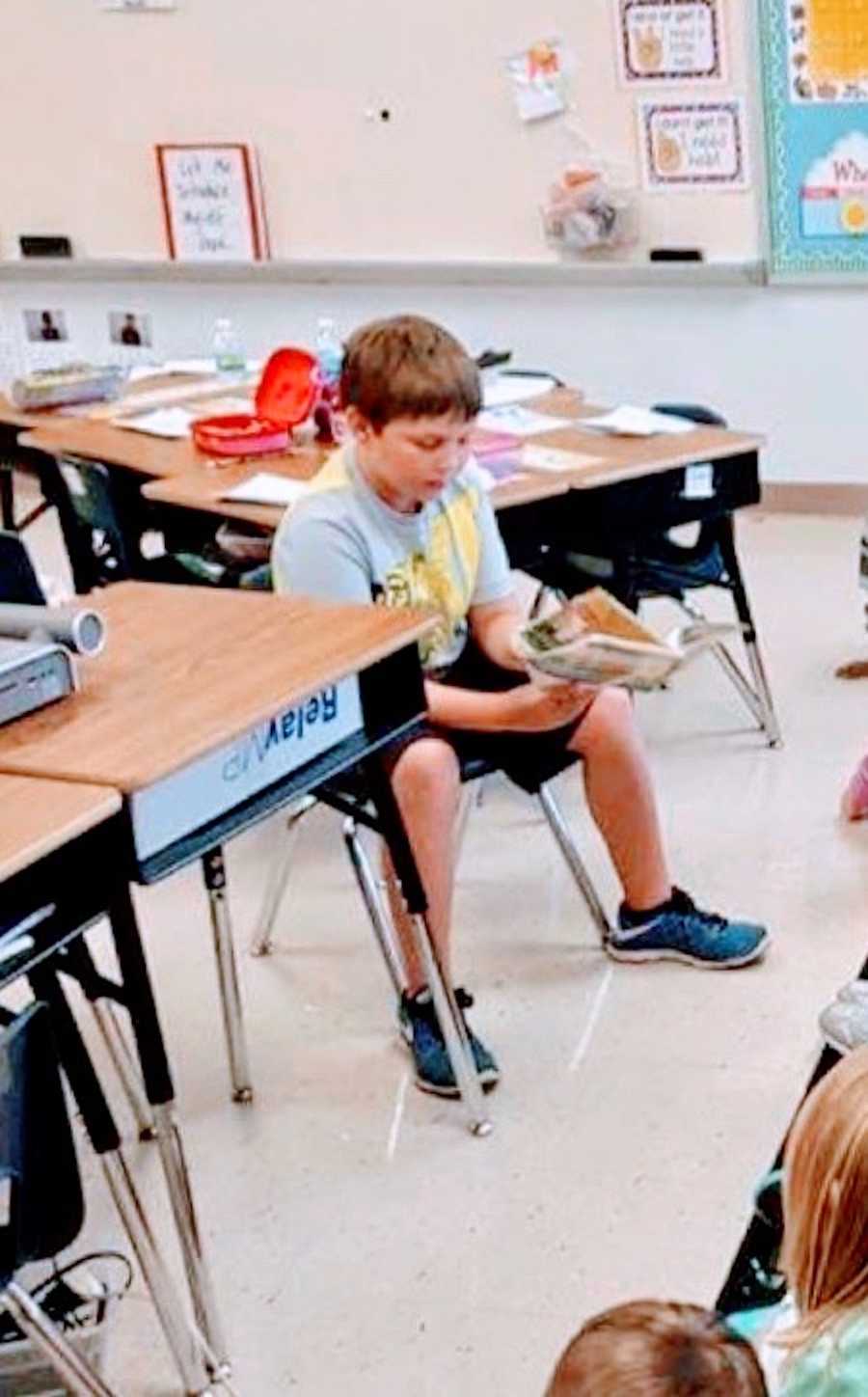
One day, I watched him cry at his desk. Through tears, he explained to his teacher that it felt like he was writing in his own language: big words swirling in his head, impossible to put on paper. His teacher reassured me, saying he was smart and would “catch up.”
That comfort made it easy to believe things would be okay. We just needed more practice, right?
First grade brought new struggles. Aiden became anxious and sad; meltdowns became daily. Simple homework assignments would consume entire evenings. He tried so hard, but something wasn’t connecting. I asked the reading interventionist to take a look, and he joined a small group for direct instruction a few times a week. Surely, early intervention would help him catch up.
It didn’t. Despite consistent support for over a year, progress was minimal. I would later learn that not all intervention programs are proven effective for children with Dyslexia.
By the second semester, subtle signs emerged that I failed to notice at first: difficulty with book directionality, words known one day but not the next. At conferences, I was asked if we were practicing at home. We were. So diligently that I bristled at the question and couldn’t fully absorb the reading specialist’s concerns. I began questioning whether my child had a severe deficit. Could literacy ever truly be attainable for him? Summer reading assignments felt painfully like reminders of his struggles.
Second grade brought clarity. Aiden’s teacher noticed the gap between his verbal brilliance and his reading and writing abilities. Dyslexia was mentioned. I immediately scoured the internet, finding the International Dyslexia Association’s warning signs. Out of thirteen, Aiden displayed eleven. I requested testing.
The first step: an eye exam. I hoped a new pair of glasses might solve everything.
It did not. The ophthalmologist asked if Aiden knew his letters. I hesitated, fumbling to explain: he was in second grade, behind in reading, with small books, a leveled reader, and an interventionist. Of course, he knew his letters—right? The doctor switched the test to pictures, and shortly after, we learned his eyesight was perfect.
The realization hit me: Aiden couldn’t recognize letters without cues—alphabet charts, word walls, even pictures. For years, he had memorized patterns, cheat charts, and flashcards. He guessed, compensated, and appeared inconsistent. At nearly eight, letters were an unsolved code, symbols of a system he couldn’t crack. And I, a teacher and his mother, hadn’t seen it.

I dove into research like only a concerned parent can—late nights, early mornings, endless calls to doctors, educational psychologists, tutors, and school professionals. The process was exhausting, confusing, expensive, and emotionally draining.
Finally, the appointment came. Outside testing, conducted by university doctors and their students, revealed the truth: Aiden was profoundly dyslexic—but also incredibly bright. The diagnosis came with detailed recommendations, a roadmap that allowed me to finally understand how to help him.
That car ride home marked a turning point. I explained Dyslexia to Aiden, and he asked, tearfully, “You mean my brain isn’t broken?”
“No, buddy. Far from it. You are bright and capable. Now we will start teaching you in the ways you learn.”

I have immense gratitude for the public educators who’ve worked with Aiden. None of us had all the answers, and even with my background in education, I struggled. Together, we learned. Over three years, Aiden has had three special education teachers, each with different training, yet all have been patient, loving, and determined. We developed routines, created introduction videos for staff, and implemented assistive technology like audiobooks. Suddenly, Aiden could “ear read” Percy Jackson and enjoy books like his peers, fueling his love of reading despite challenges.
The greatest transformation has been in his social-emotional well-being. He has become an advocate for himself and for the 1 in 5 children with Dyslexia. Aiden has organized library displays, presented to classrooms, educators, and parents, and even shared his story with the Missouri legislature. Local media have highlighted his efforts. He discusses Dyslexia openly, proudly, and even has his sights set on The Ellen Show.
Now 11, Aiden is entering sixth grade at a school for high-potential kids with learning differences—a difficult decision, but necessary for effective instruction. Our hope is he gains the skills to eventually return to his public high school with confidence.
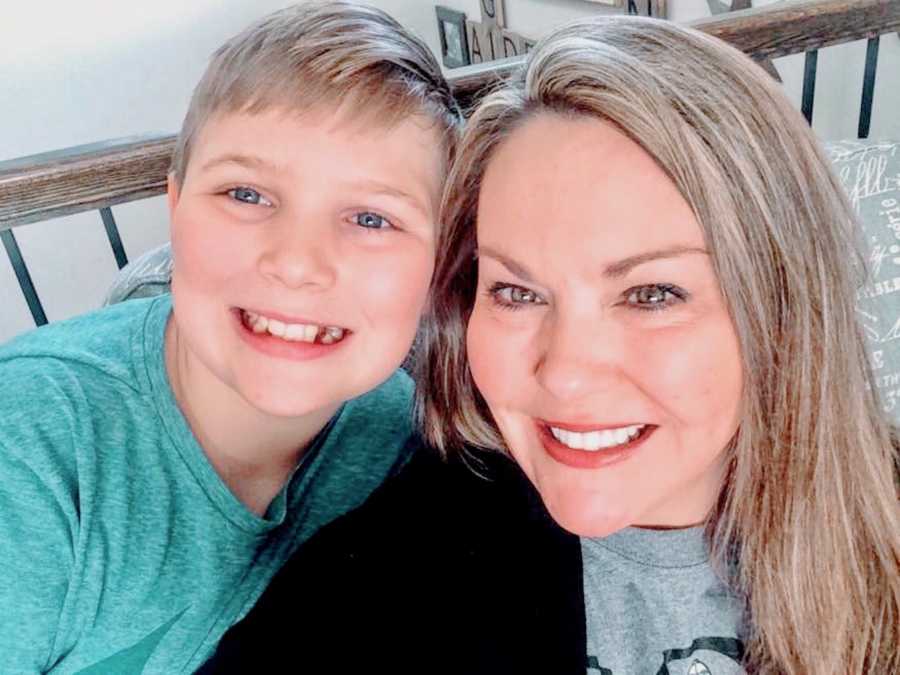
As for me, I sit behind him, recording, taking pictures, and crying. This child has discovered the power of his voice, using it to help others while building himself up.
To parents just starting this journey, or in the midst of a struggle: you are not alone. Find your tribe, trust your instincts, celebrate strengths, and share your story. For educators, your efforts matter. Patience and kindness cost nothing and mean the world to a struggling child. Together, we can help children like Aiden not just survive, but thrive.