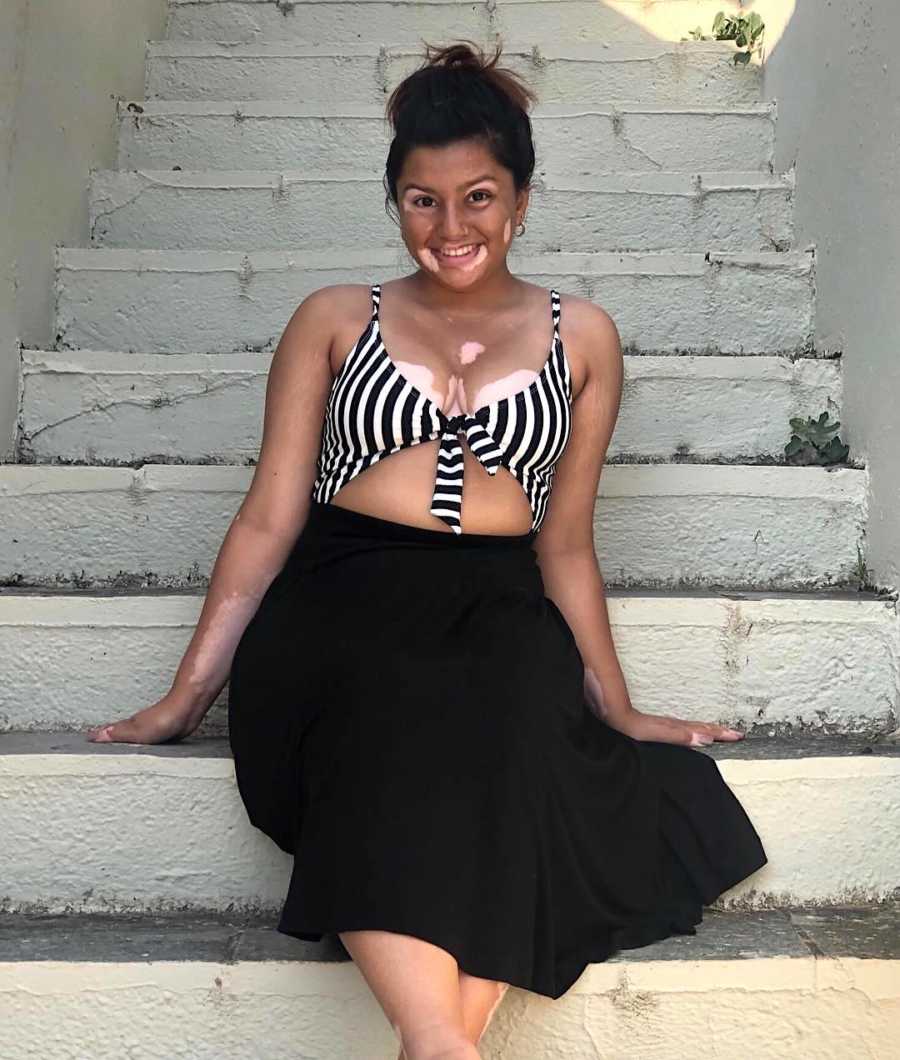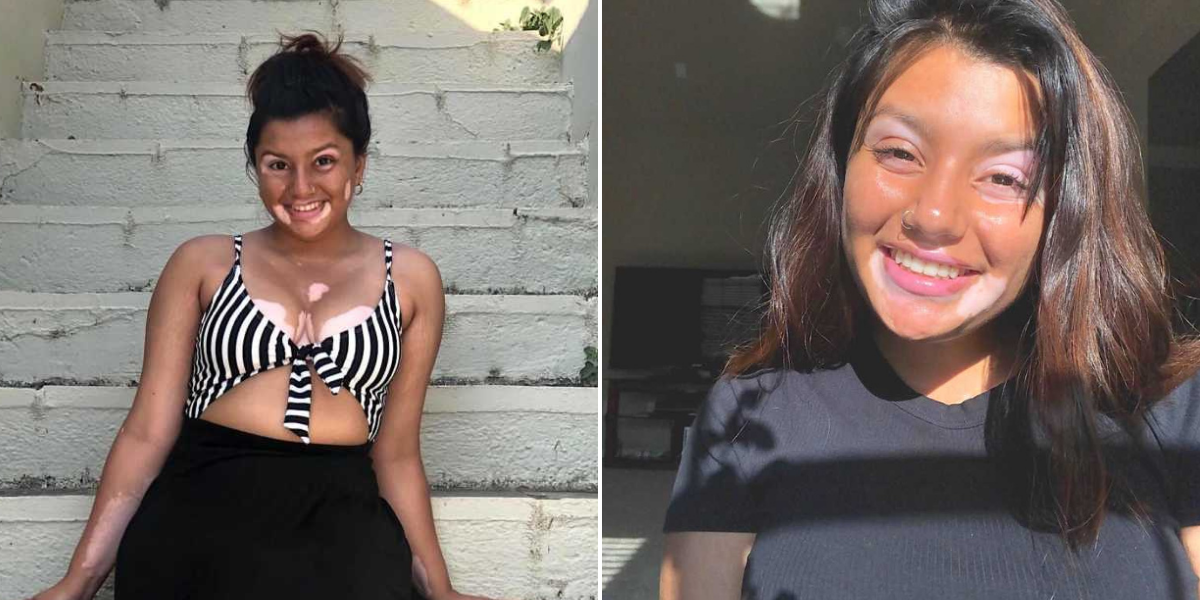
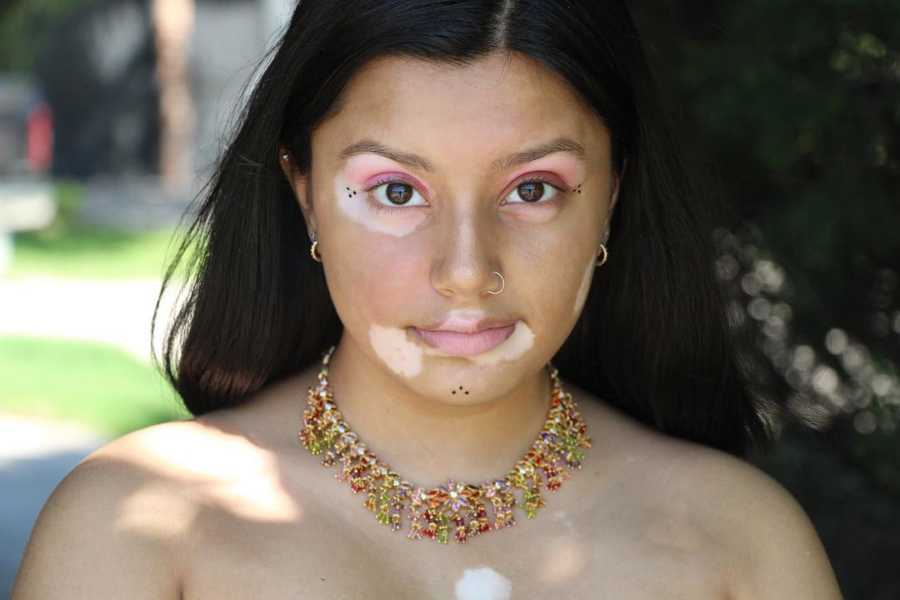
I remember being approached by strangers when I was five or six years old and asked where they could find my parents. Almost every time, they wanted to offer advice or suggest remedies they believed could “fix” my vitiligo, my skin condition. One person even told my mom, “She can get laser treatments!”—despite the fact that I was only five years old and the treatment was extremely intense and inappropriate for a child.

Although I always braced myself for yet another person trying to tell me how to get rid of my vitiligo, I would still pretend it might be someone who thought I could be a model, or someone who simply wanted to compliment me. Every single time, that hope was met with disappointment.
I was diagnosed with vitiligo at the age of five, and over the next five years, I went through what felt like hundreds of Ayurvedic doctors. Vitiligo causes discoloration of the skin due to a lack of melanin production in the body, but to me, it felt like something everyone else believed needed to be erased.
Every day became a constant battle between my confidence and the doctors who implied there was something wrong with me. That weight, combined with relentless bullying and teasing from my peers, slowly pushed me into depression. I remember being at summer camp after first grade, watching girls run away from me because they were afraid they might “catch my disease.” I never told my family any of this. They were already overwhelmed with the cost of doctors and treatments, and I convinced myself I could handle the pain on my own.
By the time I was thirteen, I had come to terms with the fact that there was nothing I could do to remove my skin condition. Vitiligo had become part of who I was, so I began fixating on other physical features instead. It started with my acne. Like most teenagers, I had pimples, but I refused to believe my experience was normal. Every night, I stood in front of the mirror, worrying about how to clear my skin and look as pretty as the other girls at school. When I finally accepted that my acne was hormonal and mostly out of my control, my attention shifted to my weight.
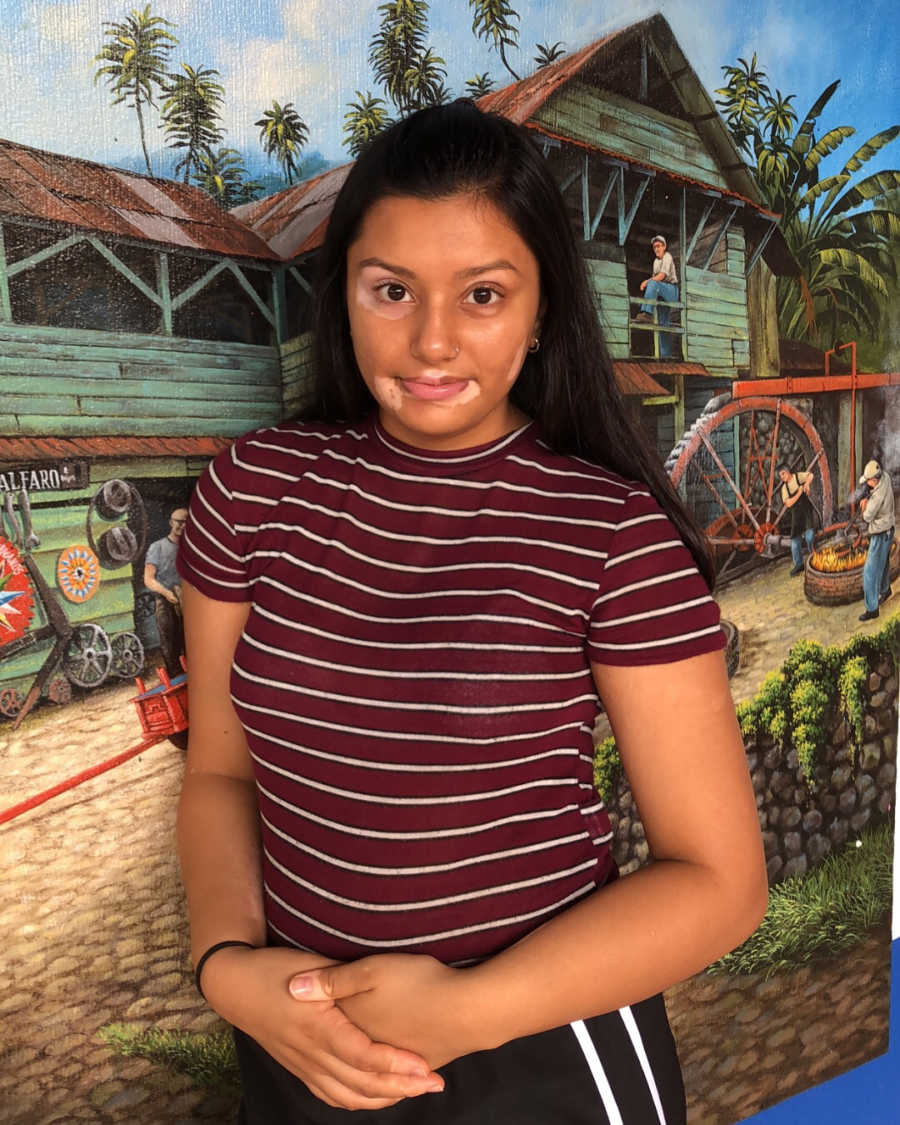
Unlike many people with eating disorders, I intentionally wanted anorexia—or at least to be diagnosed with it. Every day, as I threw away my lunch at school or did sit-ups alone in my bedroom, I reassured myself, “As soon as someone notices something is wrong, I’ll stop.” I was waiting to be seen. But anorexia is addictive. I felt proud as the weight came off. I set goals around how much food I could skip or how many pounds I could lose each week. At first, people complimented me. I had always been thin, but as the weight dropped, people started asking for my “secret.” Their praise only fueled my disorder and made me feel accomplished.
The first time someone truly noticed I had a problem, I was thirteen years old and weighed around sixty pounds. My sibling was the first to recognize the signs and told my mom that my rapid weight loss and restriction pointed to an eating disorder. At the time, my parents weren’t well informed about mental health, so they believed pressure and tough love would fix everything. I was actually excited to go to treatment—it was the first time someone acknowledged that something was wrong. I wanted to stay, because it meant I didn’t have to face the outside world and its overwhelming stress.
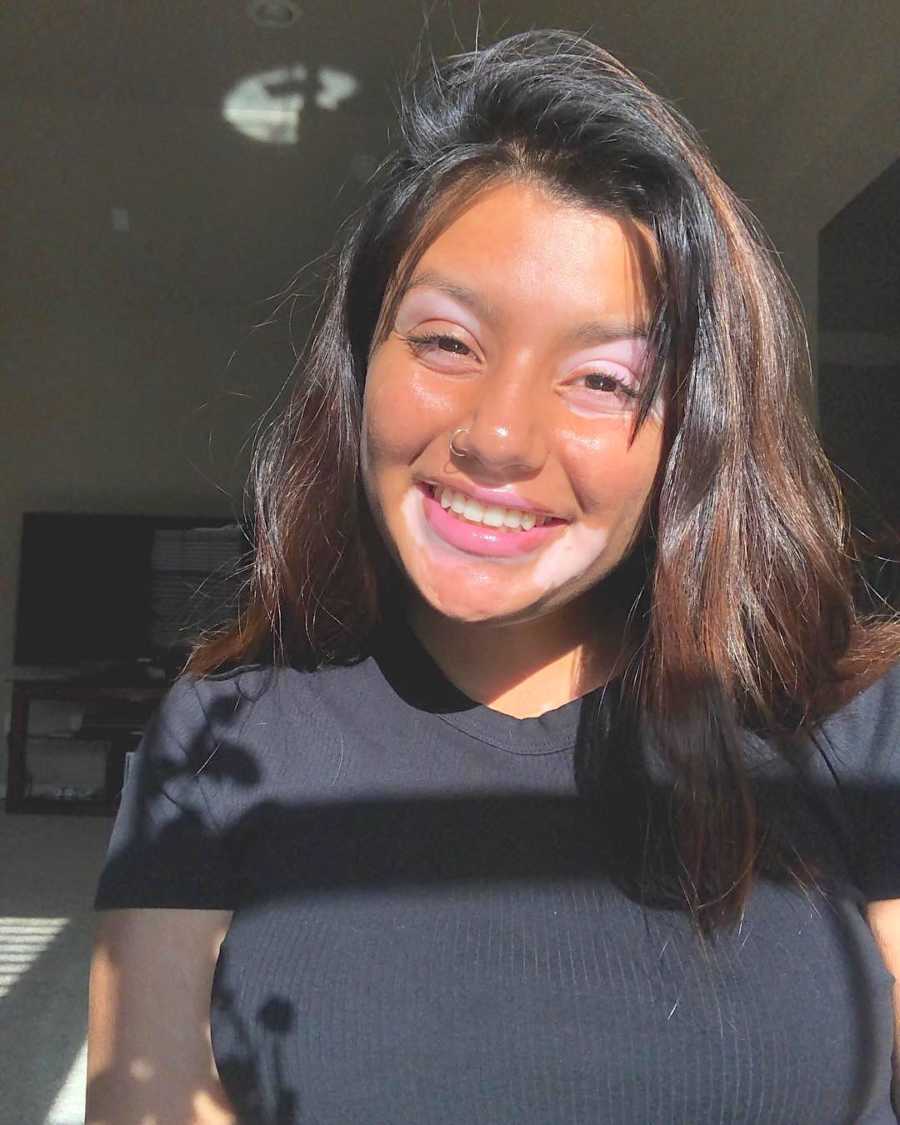
Even after years of inpatient treatment, my eating disorder felt like my best friend—the one thing I believed would never let me down. Just before my freshman year of high school, my parents and I moved across the country to start fresh. I left many things behind, but my anorexia followed me, comforting me during my time as the “new girl.”
As expected, I was placed back into treatment for maladaptive behaviors—coping mechanisms I had adopted to avoid anxiety and painful emotions. Alongside my eating disorder, I was also struggling with self-harm and suicidal thoughts. I resisted treatment for as long as I could, secretly exercising in bathrooms and planning which days I would skip meals. It wasn’t until the end of my stay at the Renfrew Center in ninth grade that something shifted. For the first time, I realized I was worth fighting for.
One of the hardest moments in treatment was being forced to leave for the first time. I didn’t want to go. Treatment was safe, and I was treated with dignity and respect there. Most importantly, I was surrounded by people who understood me. We became a family. My therapist at Renfrew, Edith, once told me, “You are the most influential person I have ever met, and I will remember you always.” Those words stayed with me.
Even now, no matter how long it has been since I left treatment for good, I still struggle at times with maintaining a healthy relationship with food and feeling confident in my appearance. People still make rude comments, and many ask if my skin is makeup. I usually smile and say, “Oh, that’s just my skin,” hoping to move on without letting it affect me.
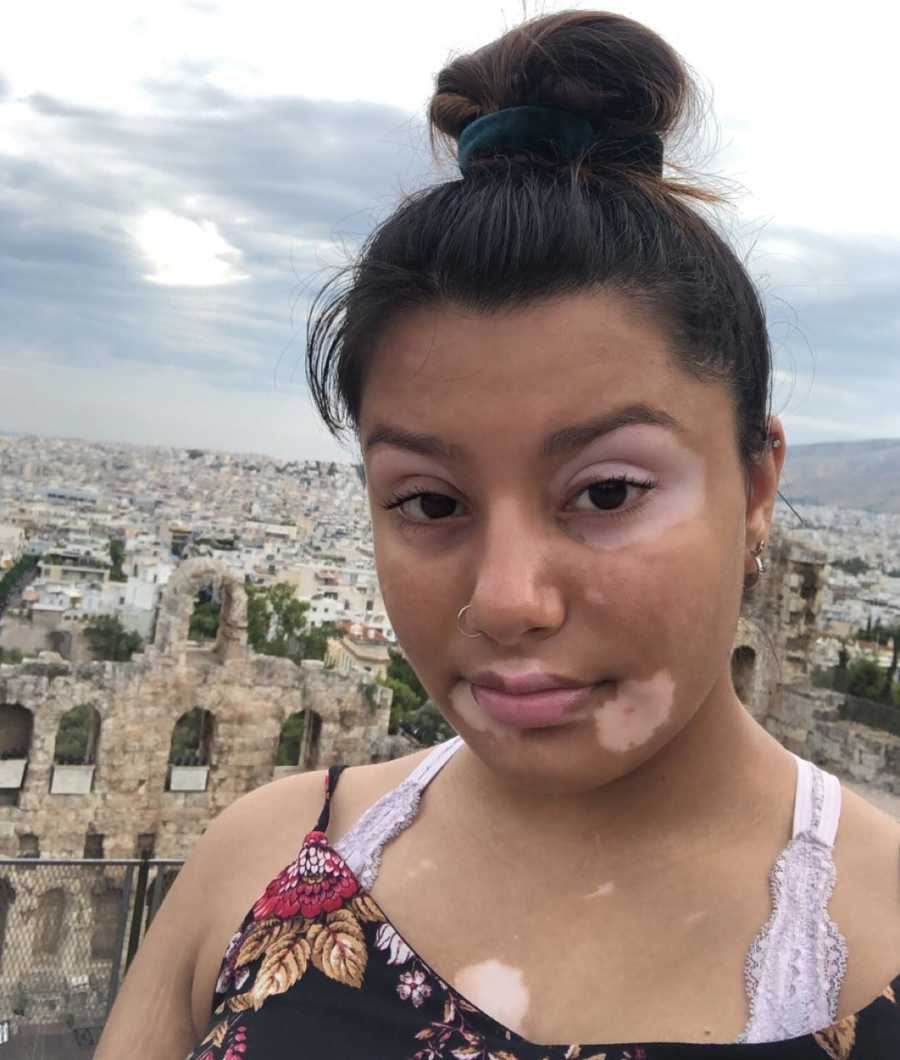
My future goals are what keep me grounded. I once wanted to become a therapist because I felt a responsibility to help others facing the same battles I had endured. Later, after experiencing racism, ridicule, and sexual assault, I realized that fighting these injustices legally could improve mental health on a larger scale.
That realization led me toward becoming a civil rights attorney, especially after losing a close friend to gun violence last summer—a case that went cold. I don’t want to see that happen again. But wanting to help others meant accepting a difficult truth: I can’t help anyone if I’m still fighting for my own life in a hospital.
Always remember that your passions can’t be fully pursued if you’re struggling to survive. Recovery hasn’t been easy—it’s been messy, painful, and uncertain—but more than anything, it has been worth it.