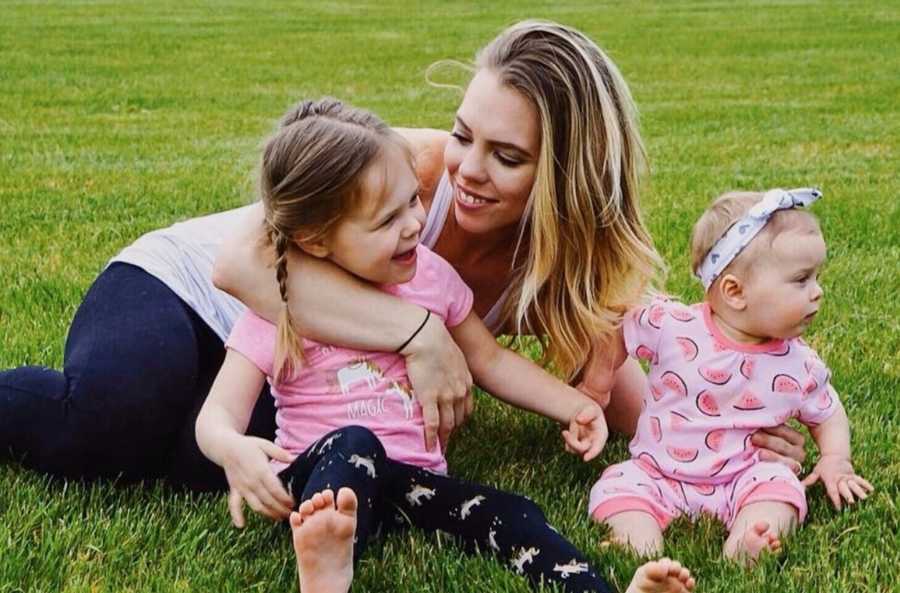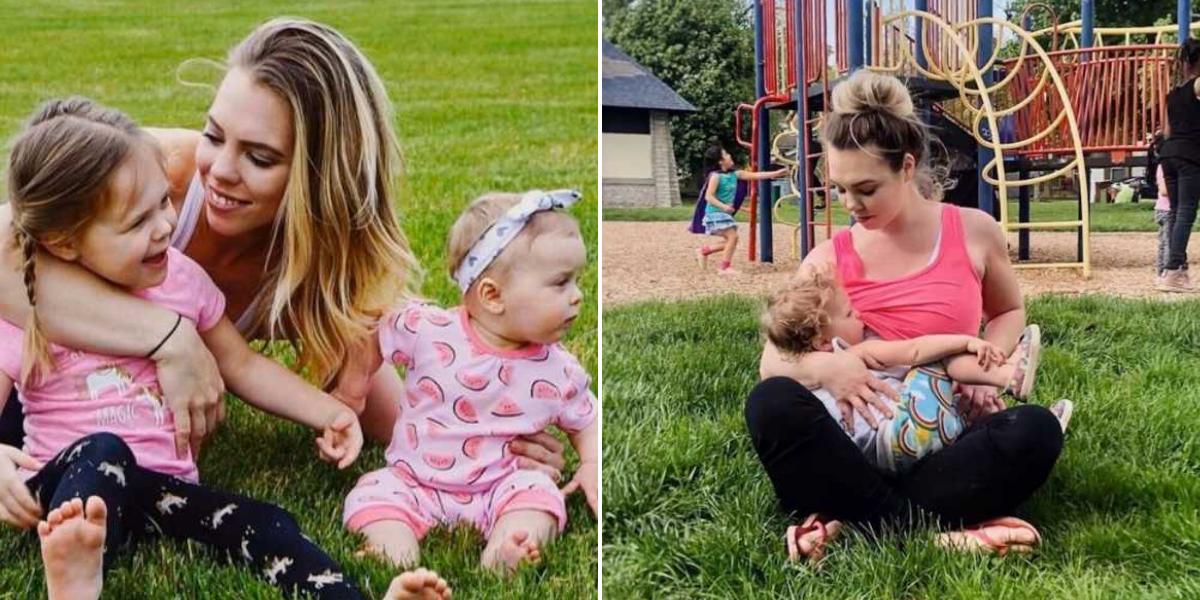
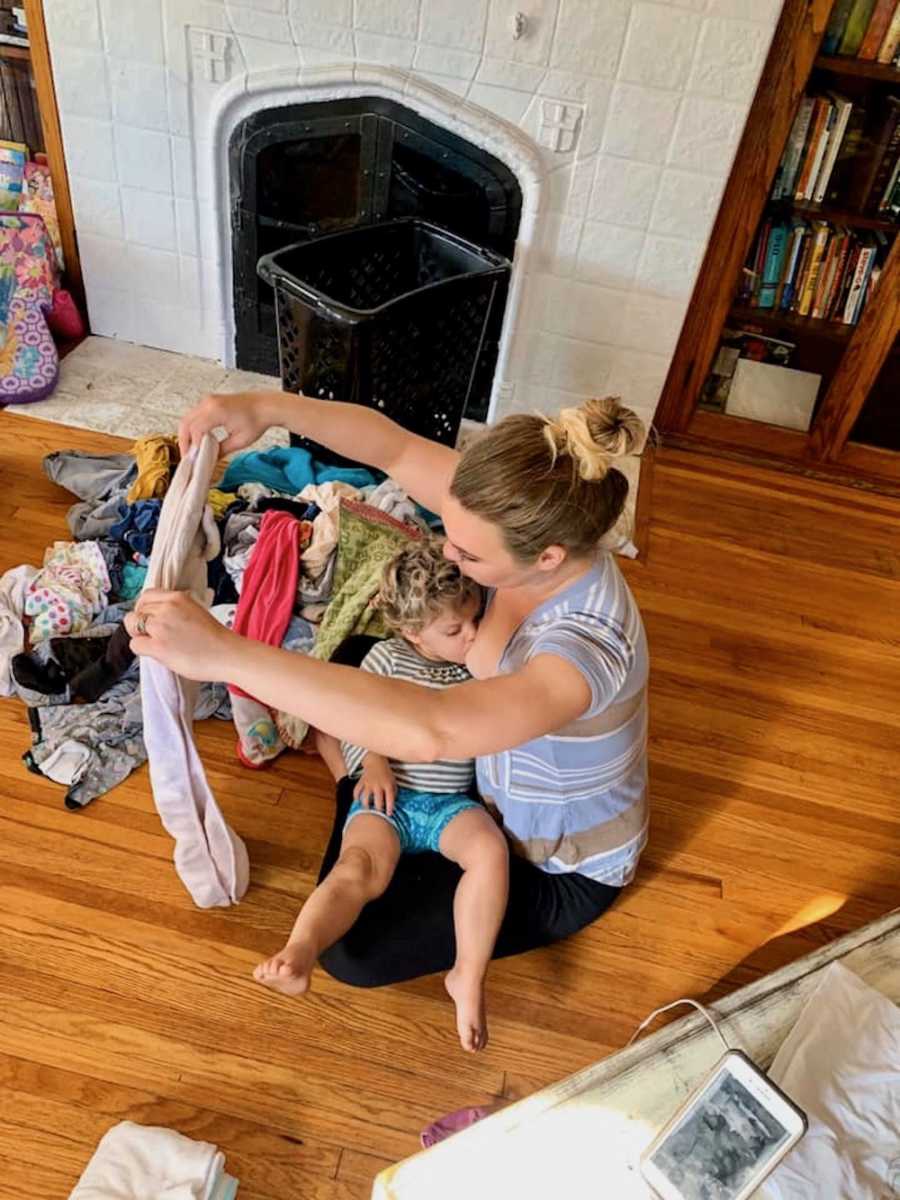
“Tell me again how breastfeeding my toddler is just for me? Doing mountains of laundry with a little human clinging to my breast is purely selfish, right? Nursing a child who swings like a monkey, tumbles like a gymnast, and attempts handstands while your nipple is firmly in their mouth—that’s exactly what self-absorbed mothers dream about, apparently!
Let me be very clear: no one breastfeeds a toddler or older child for themselves. It is always, always for their child. I repeat: it is for their child alone. No one is forcing their child to nurse indefinitely.
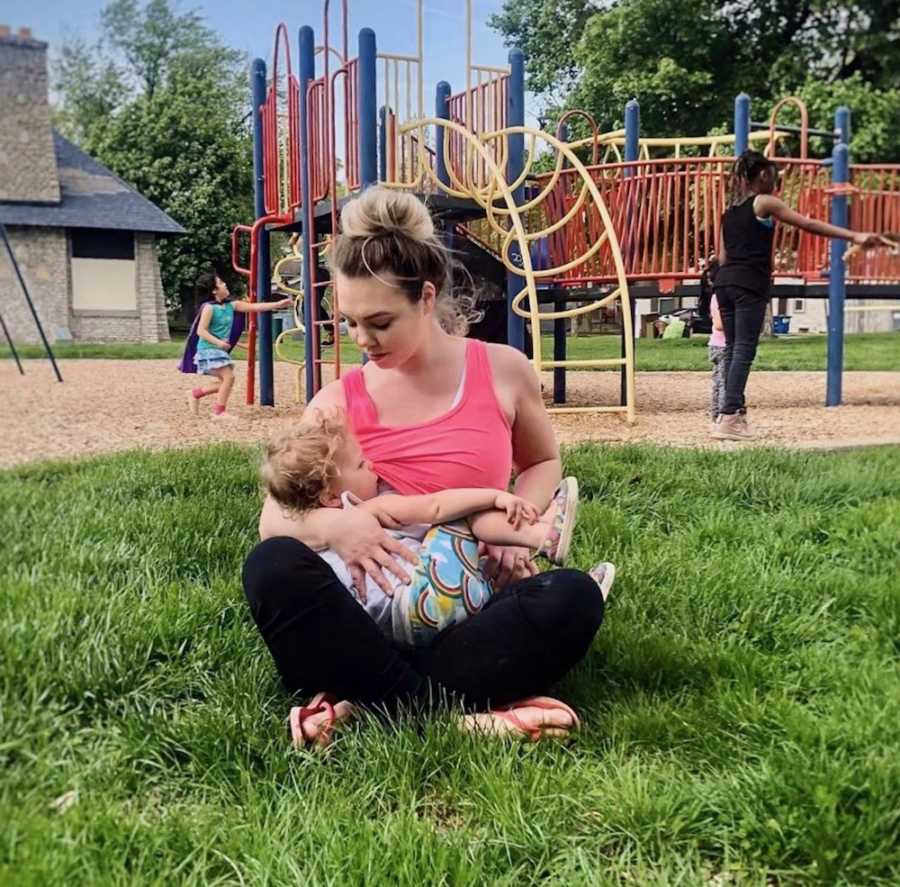
Don’t get me wrong—I still adore breastfeeding. Those quiet moments, when my toddler nurses and snuggles with me, fill my heart with an indescribable joy. Being able to soothe tears in seconds, knowing that my child is receiving antibodies and immunities uniquely tailored for them, is nothing short of miraculous. Yet, for some reason, there are people who believe mothers who practice natural-term weaning are doing it for themselves, unwilling to ‘cut the cord.’ They are wrong. Breastmilk continues to deliver vital antibodies, immunities, white blood cells, and hormones—nutrients that are essential for a child’s growth and development.
And here’s something fascinating: breastmilk doesn’t lose its benefits as the child grows. In fact, studies show that human milk in the second year postpartum contains significantly higher concentrations of total protein, lactoferrin, lysozyme, and Immunoglobulin A compared to milk bank samples, while having lower concentrations of zinc, calcium, iron, and oligosaccharides (Perrin, 2016).
During the second year of life—12 to 23 months—just 448 mL of breastmilk provides:
- 29% of daily energy needs
- 43% of protein requirements
- 36% of calcium requirements
- 75% of vitamin A needs
- 76% of folate requirements
- 94% of vitamin B12 needs
- 60% of vitamin C requirements (Dewey, 2001)
Pretty incredible, right?
Beyond nutrition, breastmilk supports the immune system in ways that can last years. It provides all the immunoglobulins the body needs to develop a resilient immune system—a process that takes about five years. Humans are born extremely immature compared to other species and require the most intensive caregiving for the longest period—decades—to reach full maturity. Breastfeeding remains an important part of that growth, supporting the brain, body, and overall development well beyond infancy.
And let’s not forget that breastfeeding isn’t just about sustenance. It provides comfort, calms anxiety, reduces inflammation, aids sleep, acts as medicine, and fosters an unmatched bonding experience between parent and child.
Call me crazy, but maybe that’s why the World Health Organization recommends breastfeeding until at least 2 years and beyond. Maybe that’s why natural weaning typically occurs between 2 and 7 years old.

So, once again, we aren’t continuing to breastfeed past infancy for ourselves. We aren’t clinging out of fear or reluctance. We do it for our child’s optimal health, growth, immunity, and comfort. That’s why every drop of milk and every quiet cuddle truly matters.”