Purple has always been my mom’s favorite color. Back in the 1970s, that made it easy—and apparently irresistible—to surround herself with it. Our purple dining table came with matching purple leopard-print roller chairs, proudly celebrating her love of the color. The kitchen, dining area, and even the bathroom were wrapped in various shades of lavender, from the walls to the lino floors. As a child, it felt quirky and fun, a defining part of our home. Beyond the purple, though, my mom was a devoted, loving mother to her three children, deeply committed to our family.
That sense of amusement ended abruptly when I was thirteen, on a day I will never forget. Purple and I became enemies that evening. I walked through the door expecting supper and instead stepped into the beginning of years of heartache, confusion, and anger toward an invisible mental illness. My normally reserved mother sat on her purple chair beside the purple table, babbling nonsensically about a purple ten-dollar bill. She spoke of a magician and other delusional ideas that made no sense to me at the time. That night marked the first of many hospitalizations. Mom would disappear from our family life for at least a month at a time. It was also when I learned her bipolar illness wasn’t new—it had lain dormant for years. I discovered she had experienced episodes even before I was born. Back then, it was called Manic Depression, later renamed bipolar mental illness.
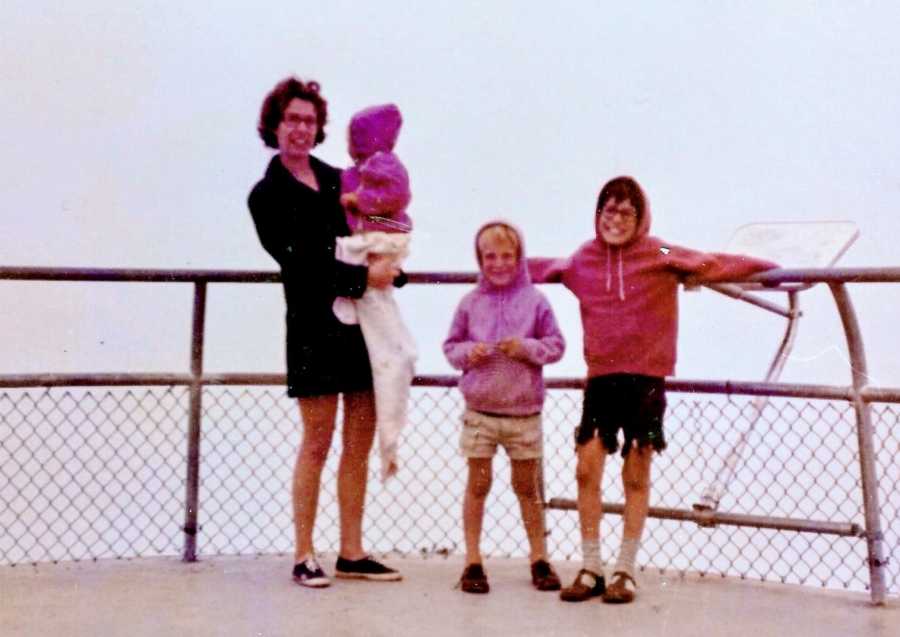
During that first episode, my dad gently asked if I wanted to stay with a friend. I refused. Instead, I became fiercely independent and guarded, careful about who I told and what I shared. I rejected sympathy from friends and family, recoiling at anything that felt like pity. I didn’t want to be seen through that lens.
Over time, purple became my unconscious symbol of the destruction of our mother-daughter relationship. As Mom’s bipolar illness surfaced regularly—sometimes once a year, sometimes twice—the signs became familiar. Sleepless nights would creep in, followed by nonstop phone calls in the early hours of the morning. There were impulsive shopping sprees, bags filled with unnecessary items, and then the quiet aftermath when Mom was hospitalized again. Each time she returned home, she expected to step back into her role as a parent. Each time, I rebelled against it. The tension was painful for both of us.
My grandmother, my mom’s mother, was also bipolar. I couldn’t help but wonder if my fate was already written. My dad reassured me that I was different and that this adversity would shape me into a stronger person. As I grew older, I began to believe him. Still, the loss of a close, bonded mother-daughter relationship felt like a heavy price to pay. Watching other women treasure those relationships made it even harder, and at times I wondered if inner strength was worth what I had lost.
At eighteen, just one month after my dad passed away, the roles shifted in a heartbreaking way—it became my responsibility to hospitalize my mother. Losing my father so young was agonizing, but the depth of my mom’s grief was immeasurable, and her illness could no longer be contained. I don’t remember the warning signs that day. Somehow, I got her into the car and drove her to the emergency room. Until then, Dad had shielded me. When Mom’s symptoms appeared, he took her to the hospital, and that was all I ever knew. This time, it was different. The staff placed us in a small room. As I sat there, Mom flicked the light switch on and off for what felt like ages. She wanted to leave, and I had to convince her to stay. Hours later, the doctor arrived. They took my crying, angry mother away, and I went home completely stunned.
Visiting her over the next month was a shock. I walked in my father’s footsteps, finally understanding how he must have felt. I can still see her hand scraping against the window of her locked room, locked for her own safety. I remember the days she was severely catatonic, staring into space from a wheelchair. As she improved, that emptiness turned into overexcited introductions to every patient on the ward. As distressing as it was, not once did I consider not visiting her.
Life moved on—through countless events, repeated hospitalizations, and nearly twenty years of learning how to live with this reality.
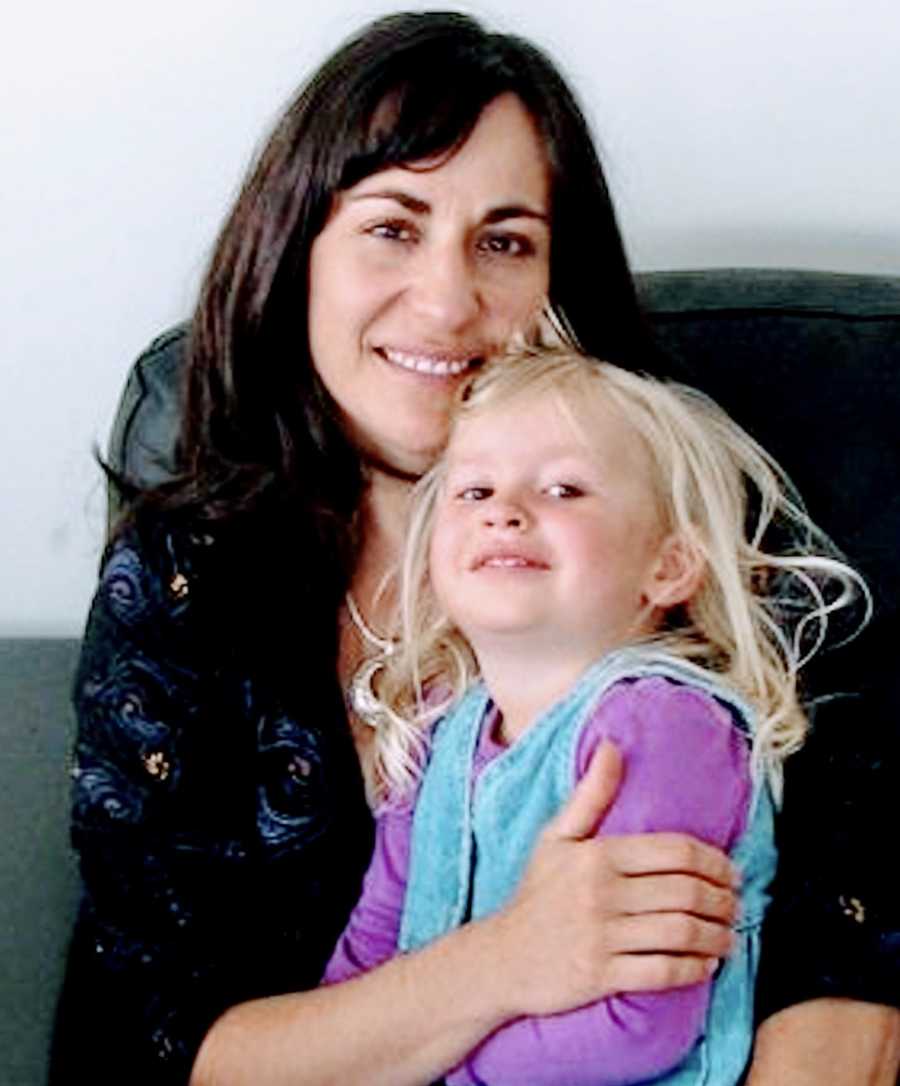
I still hated purple. I never told my mother, but it remained a symbol of the painful distance between us caused by her bipolar illness. Then, in 2008, my beautiful daughter was born. My husband and I were overjoyed to give our son a sibling. When my daughter turned two, I felt an unexpected sense of relief when her favorite color turned out to be pink. Yet her presence stirred old wounds I had carefully tucked away. I’m grateful for that now, because they needed to be healed. My hatred of purple was one of them. In her early years, I avoided buying her purple clothes, though others gifted them. I didn’t want to pass my pain on to my innocent child, so she wore them. Slowly, it became impossible to hate a color when it was wrapped around this vibrant little girl I loved so deeply.
When I began my childhood painting series, one piece—Catch and Release—became a turning point. I chose to paint the balloon purple. The little girl in the painting plays catch with it. It was a deliberate choice, one I didn’t make lightly. I felt drawn to it, almost invited.
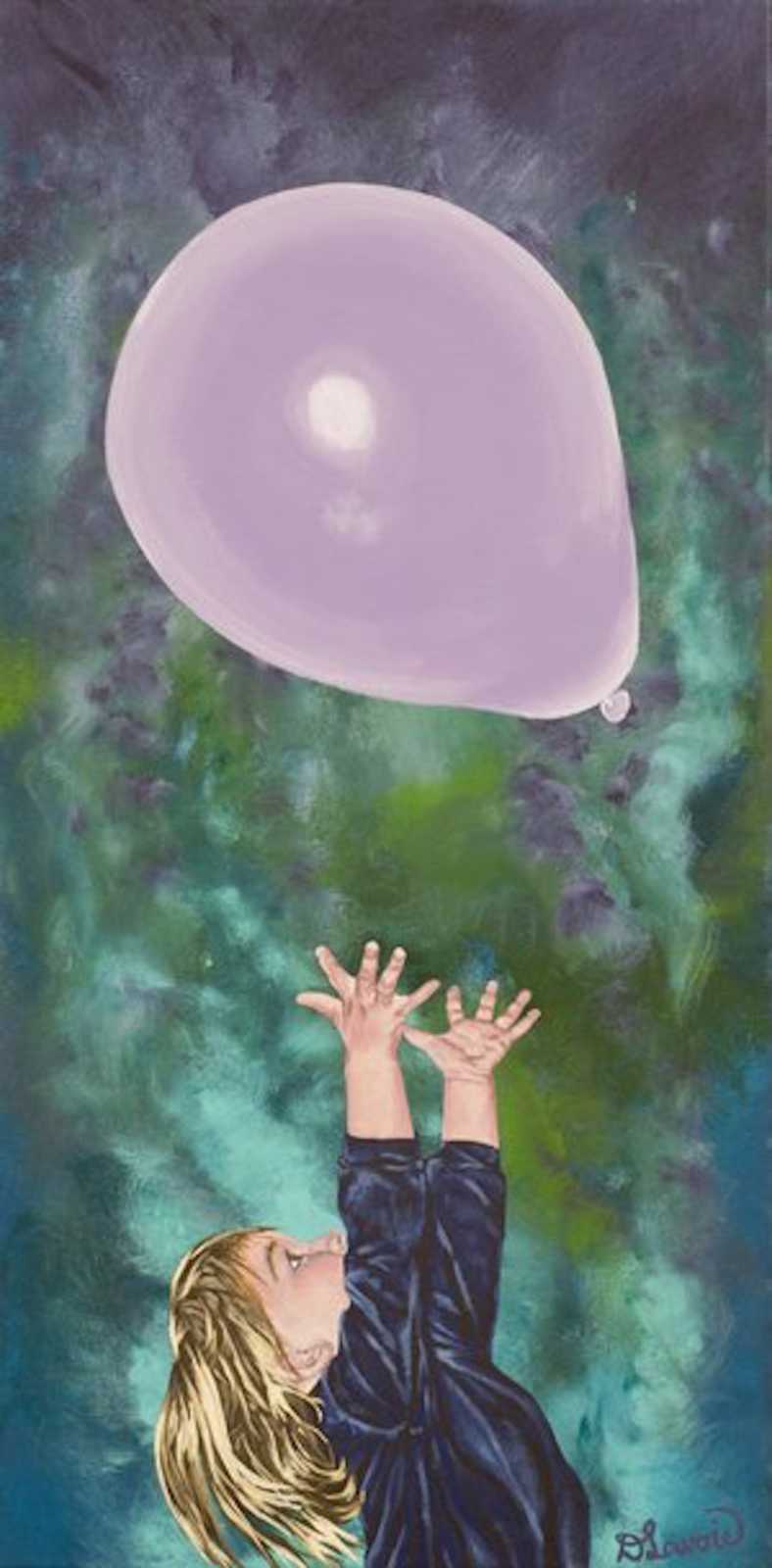
Like dreams, artwork can reveal hidden meanings long after it’s created. Months later, the symbolism became clear to me. I am the little girl in the painting, gently playing with the balloon. The balloon is my mom during the times her illness is managed—when I can connect with her, let go of the sadness, and simply be present. When she becomes ill again, I must release her, resisting the urge to parent her. In those moments, I trust that she is safe, supported by caregivers and medication until she reaches the healthy side of the episode. The balloon is large, nearly bigger than the child, yet light enough to cradle. It represents my inner strength. Some situations feel enormous, but no matter their size, I trust my ability to carry them. The phrase “purple power” often comes to mind.
One cold January afternoon, shortly after writing this, I walked to pick up my daughter from school. I glanced down at my maroon winter coat and realized how far I’d come. After all, maroon is purple mixed with red—a color of love.
Purple will never be just another color to me. But I’m grateful that, at last, we’ve learned to be friends.