“I’m sorry, but Cheyenne has cancer.”
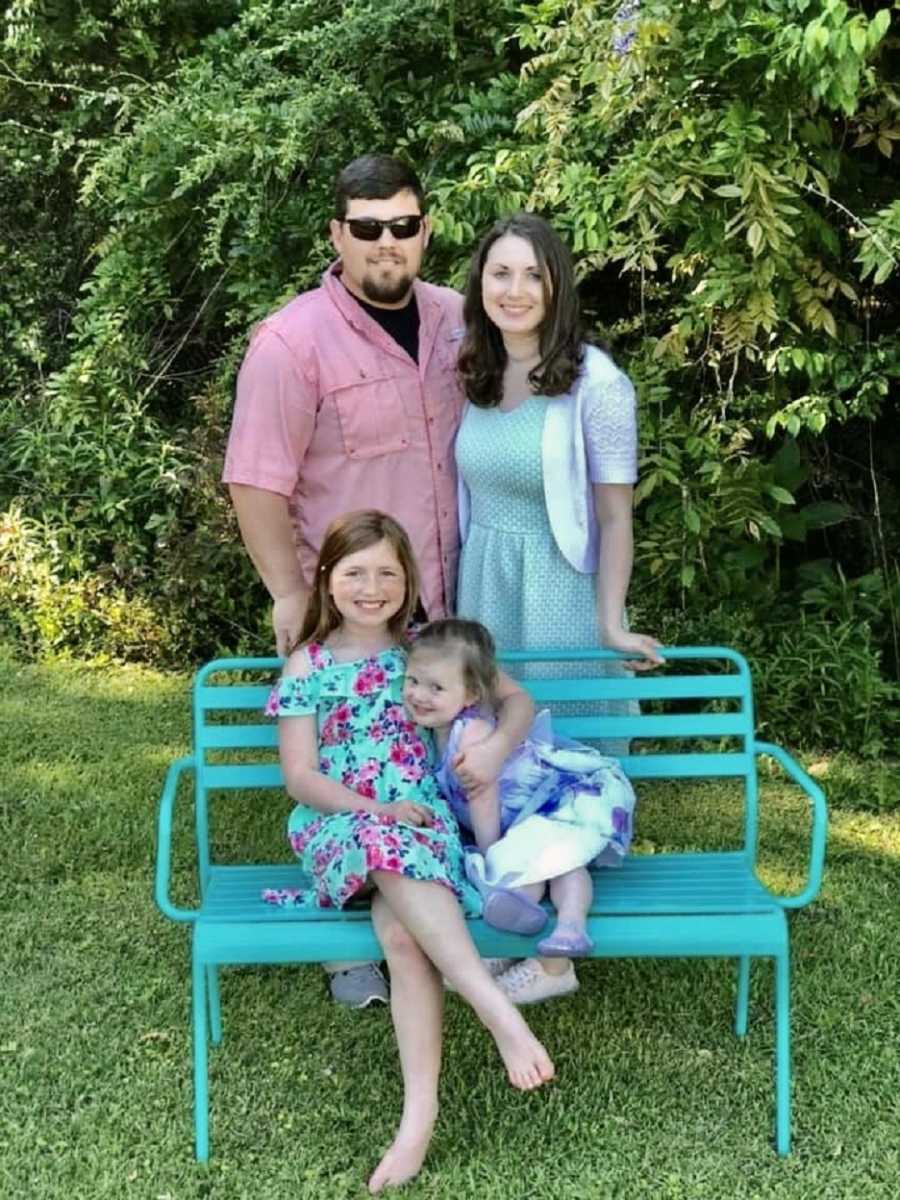
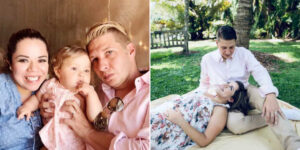
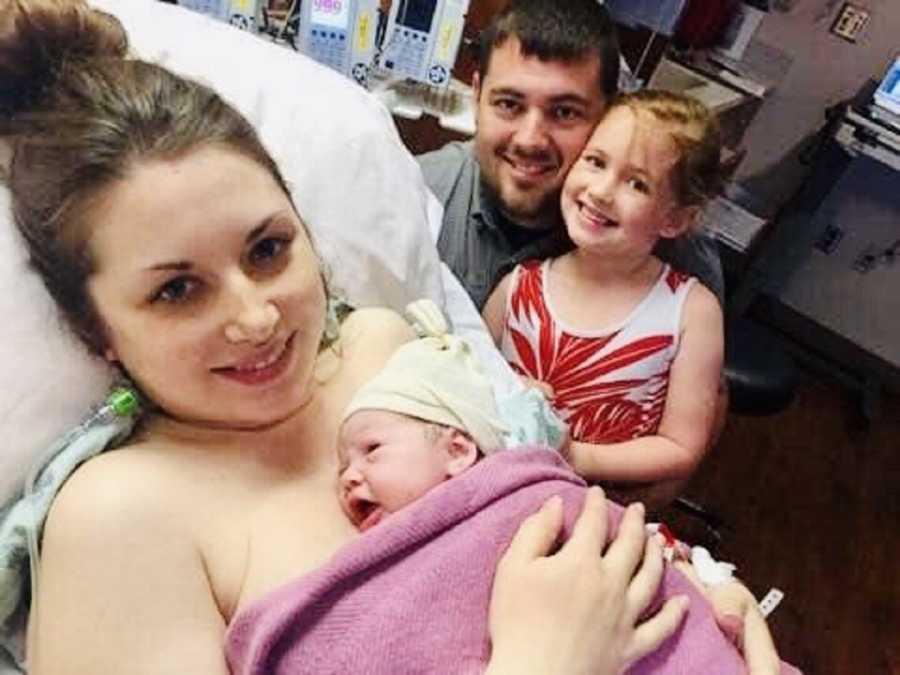
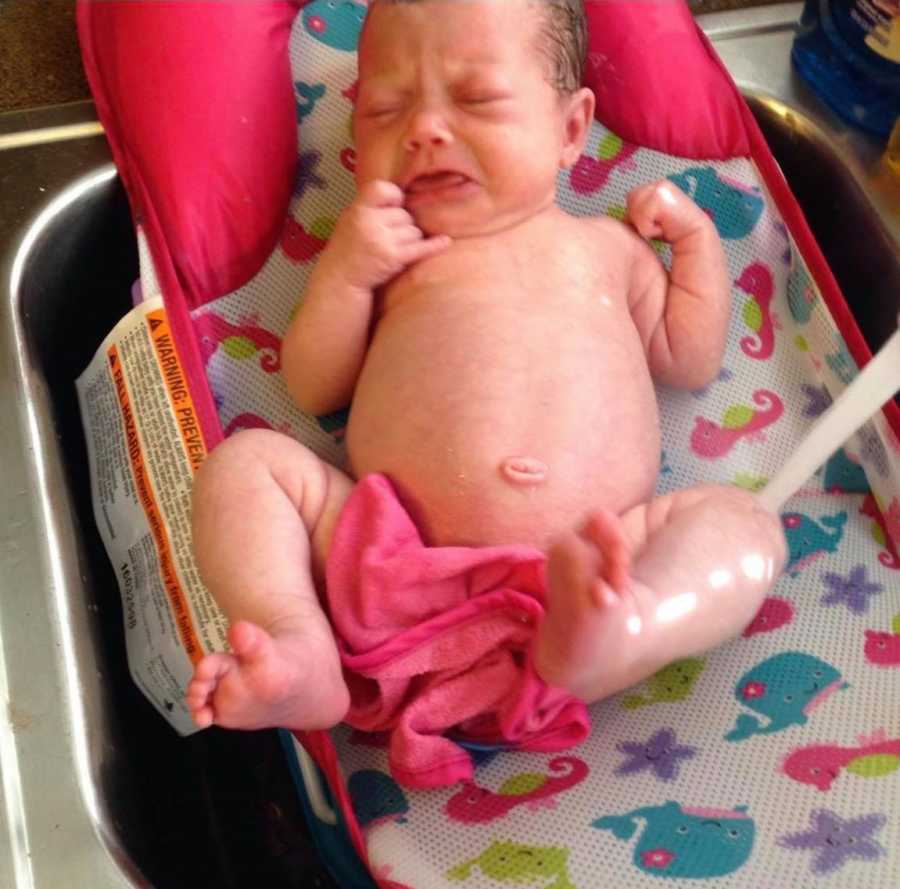
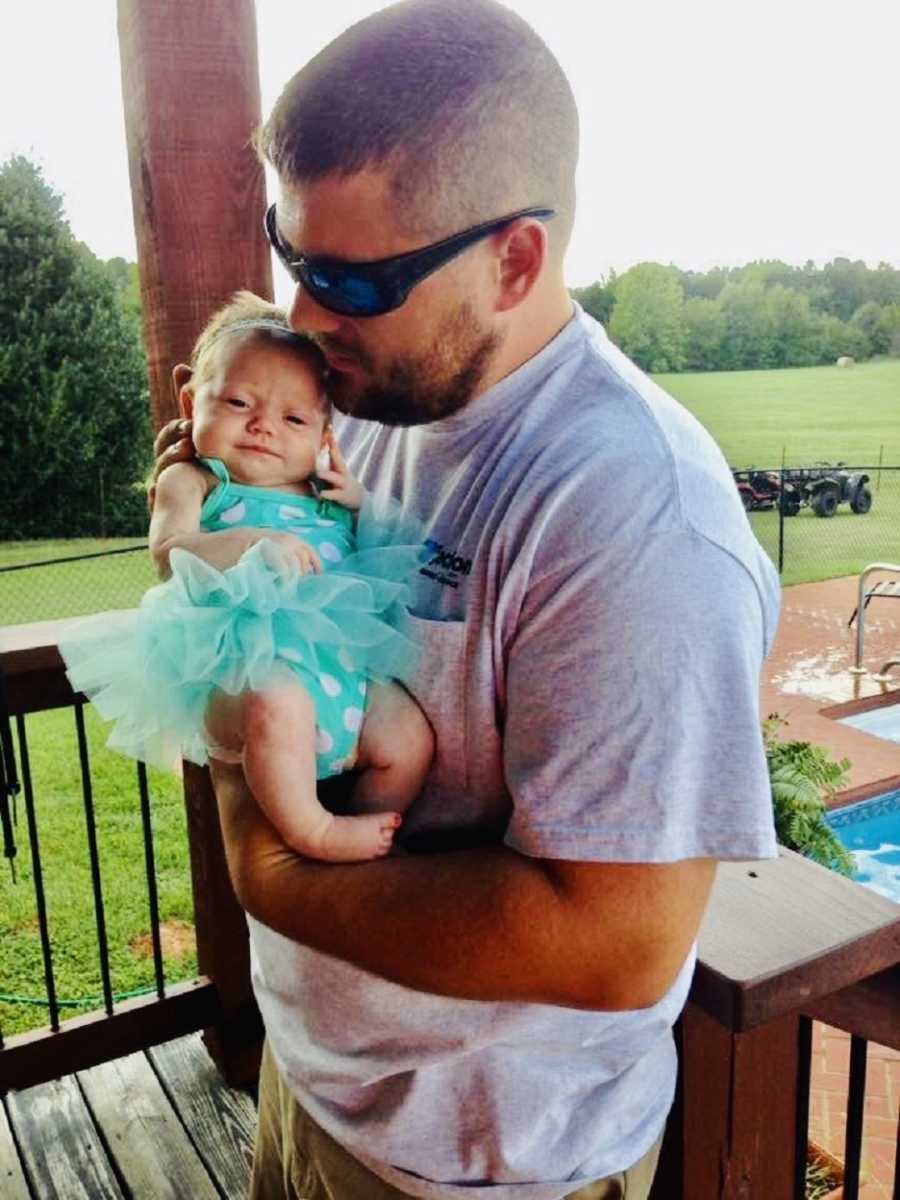
Our second daughter, Cheyenne, was born on July 17th, 2016. She weighed 7 lbs 7 oz, and at first glance, both the doctors and we believed she was perfectly healthy. But a few weeks after bringing her home, I began noticing something unusual—her stomach seemed unusually bloated, particularly on one side. I asked family members and a few nurse friends to take a look, but no one was concerned. They all reassured me it was just typical baby bloating.
When it was time for Cheyenne’s two-month shots, I brought up my concern to her pediatrician.
“Her stomach doesn’t feel right. It feels too bloated,” I explained.
The pediatrician examined her carefully. “Hmm… it does feel hard. I want you to go straight to the local hospital for scans,” she said.
Fear gripped me. I called my husband, Cody, at work, and he left immediately to meet me at the hospital. Cheyenne underwent the scans, and we returned to the pediatrician for the results. By that time, a crowd of our family members had gathered in the waiting room, anxious but unaware of what we were about to hear. The doctor called us into a private room.
“There is a mass in Cheyenne’s stomach,” she said. “I’m sending you straight to the Children’s Hospital in Birmingham, Alabama.”
Birmingham was two and a half hours away. I felt dizzy, overwhelmed, unable to process everything at once. “Please sit down,” the doctor urged, pointing to a chair. “Take a moment to compose yourself.”
We had to leave the office and break the news to our family. I just cried, unsure of how to explain it to our seven-year-old daughter, Cambryn. Finally, we told her, “Don’t worry, we’re just going to get Cheyenne checked out.”
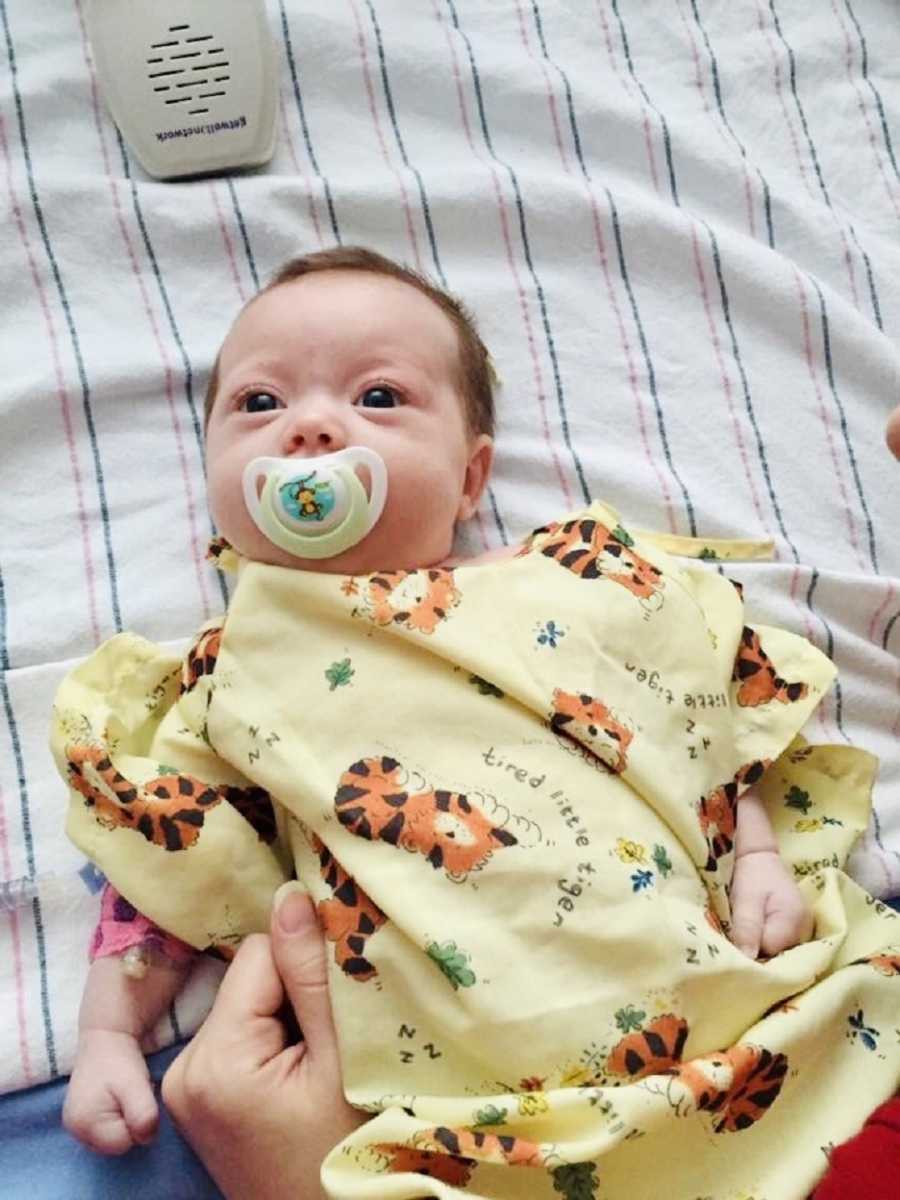
The next morning felt like the longest day of our lives. On the drive to Birmingham, Cody broke the silence. “Tiffany… I Googled ‘mass in a 2-month-old stomach.’ Neuroblastoma cancer came up.”
I snapped, terrified. “Cody! Don’t say that! She’s just a baby. Maybe it’s nothing serious—maybe it’s even benign.”
At the hospital, Cheyenne underwent blood and urine tests to get quick results. My mind refused to accept that we were in a cancer clinic; I clung to hope that everything would be fine. Then, an oncologist called Cody and me into the waiting room. She asked about our family medical history, and then came the words that stopped my heart.
“Have you or anyone in your families had cancer before?”
I exchanged a look with Cody, and in that instant, we knew what was coming. The doctor’s eyes welled with tears.
“I’m so sorry,” she said softly, “but Cheyenne has cancer.”
Cody broke down immediately. I did too, but amidst the tears, my mind raced with questions. “What do we do now? What are the next steps? Did I do something wrong? How could this happen? She’s just a baby. What kind of cancer?”
The doctor continued. “Cheyenne is not a low-risk patient. We can’t remove the tumor yet. She needs to be admitted today.”
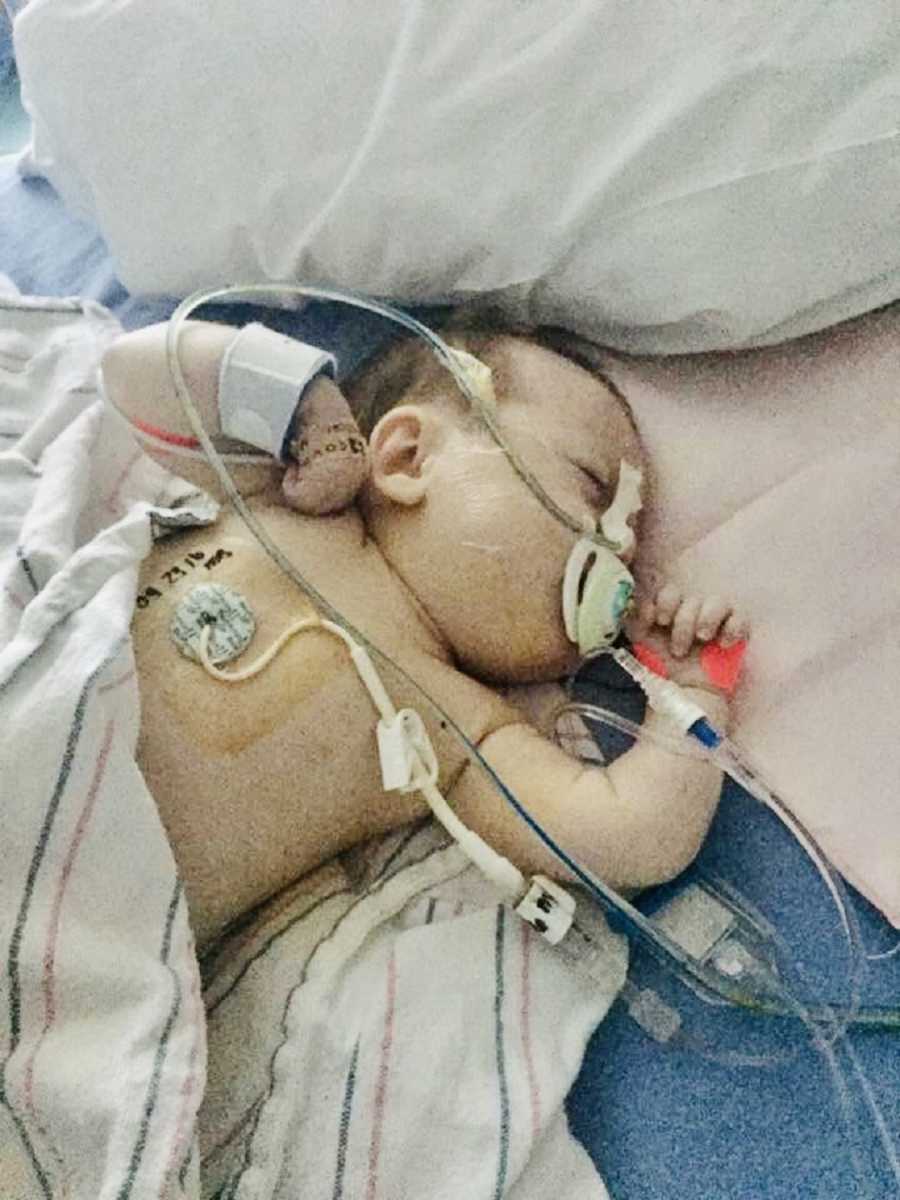
Cheyenne was admitted that same day, and Cody and I were allowed to stay with her. I had to leave our older daughter in the care of family. “Please help her with school, homework… just take care of her,” I begged them.
Doctors quickly scheduled Cheyenne for surgery: a biopsy to determine the cancer type, a bone marrow scraping, and the insertion of a central line port. The diagnosis was confirmed—Neuroblastoma, intermediate risk. She would need chemotherapy. After surgery, we couldn’t even hold her; she had to remain in her hospital bed, attached to a feeding tube. That’s when I broke completely. I whispered to God, “Why her? Why not me? I don’t even know who she is yet, and I need her.”
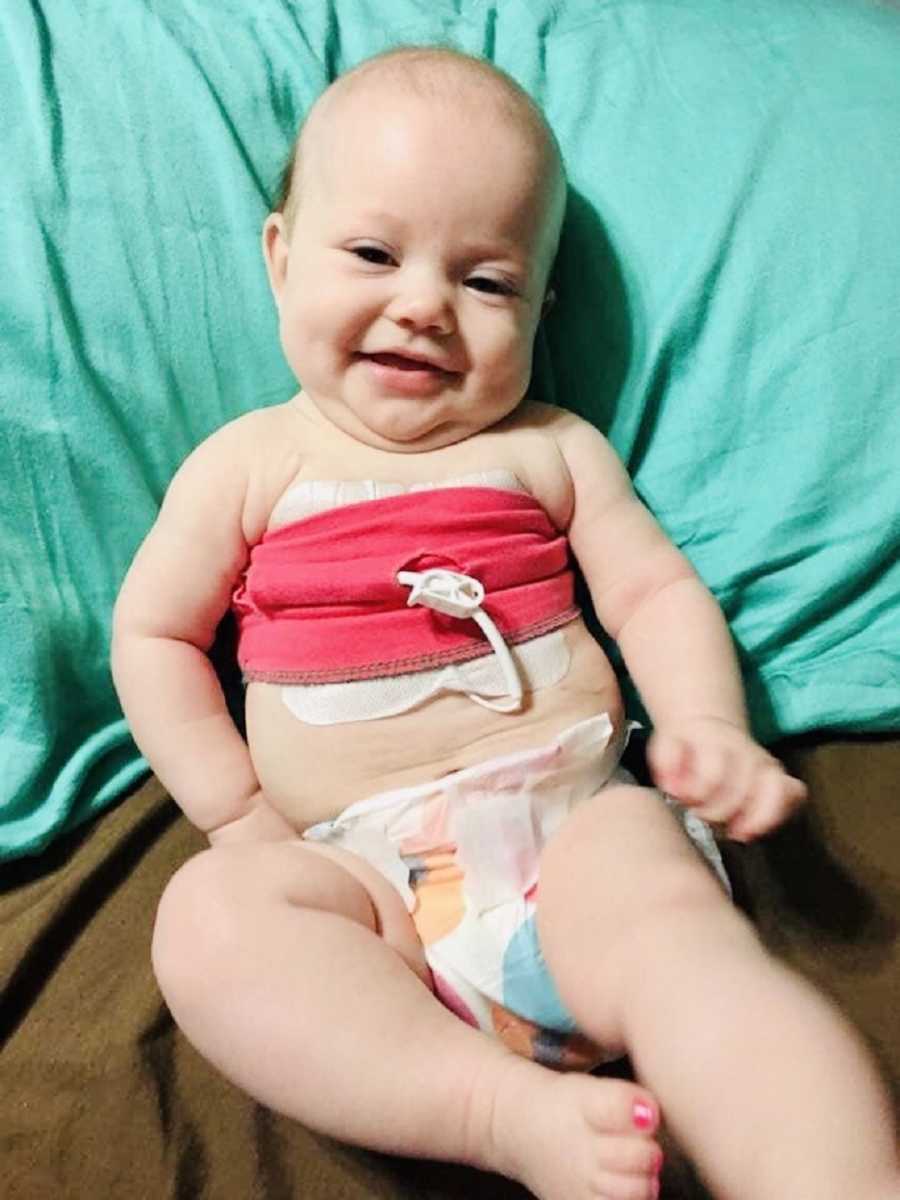
Cody and our nurse, Casey Rae, helped me through it. “Get in the bed with her. Curl up with your baby girl,” Casey instructed.
And so I did. Holding Cheyenne calmed me as much as it calmed her. We needed each other more than ever.
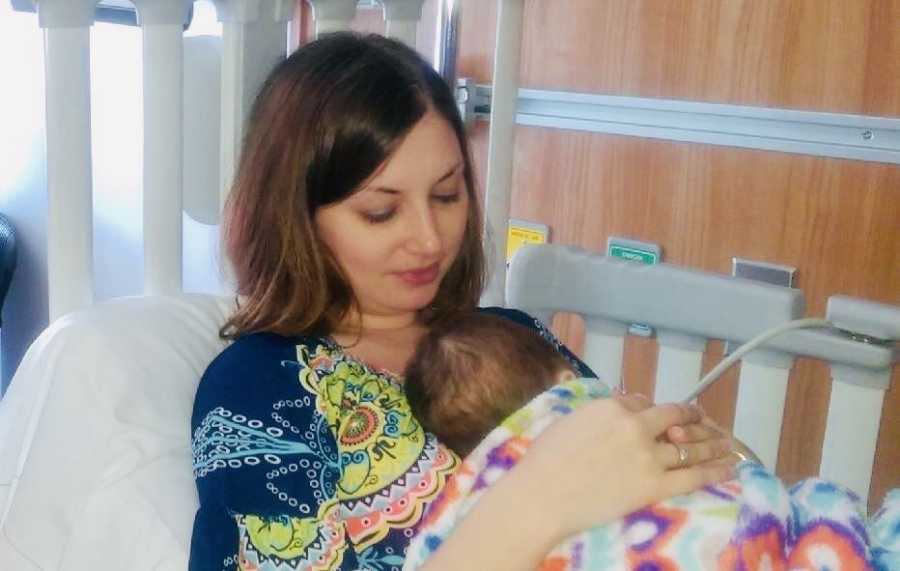
Cheyenne endured two rounds of chemotherapy, two blood transfusions, and the loss of her beautiful dark brown hair. For three months, we didn’t leave the house. When it was time for her third round of chemo, doctors expected only a 40% tumor reduction. But that day, we brought her to church, and a room full of people prayed over her. Miraculously, her tumor shrank by 82%. I witnessed the work of God that day—her tiny body responding in a way that defied expectations.
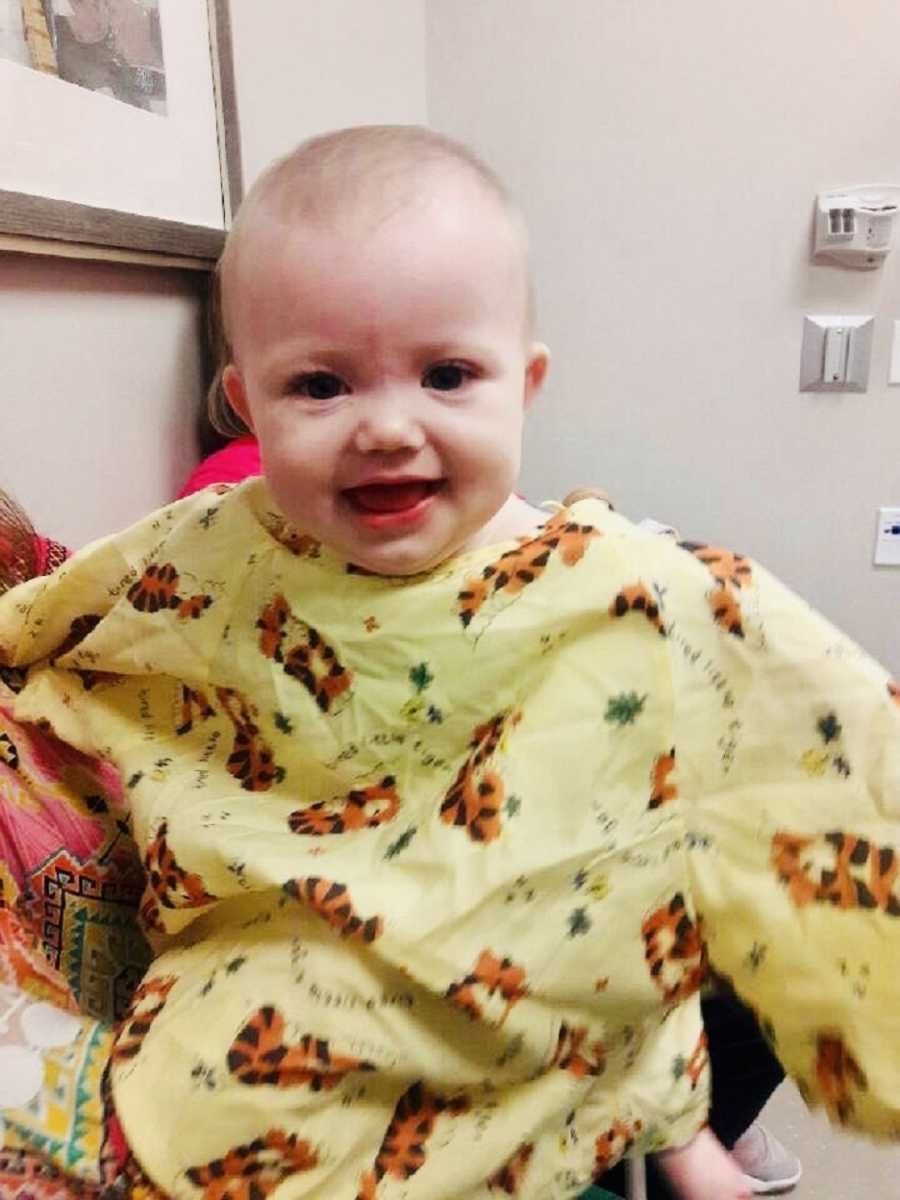
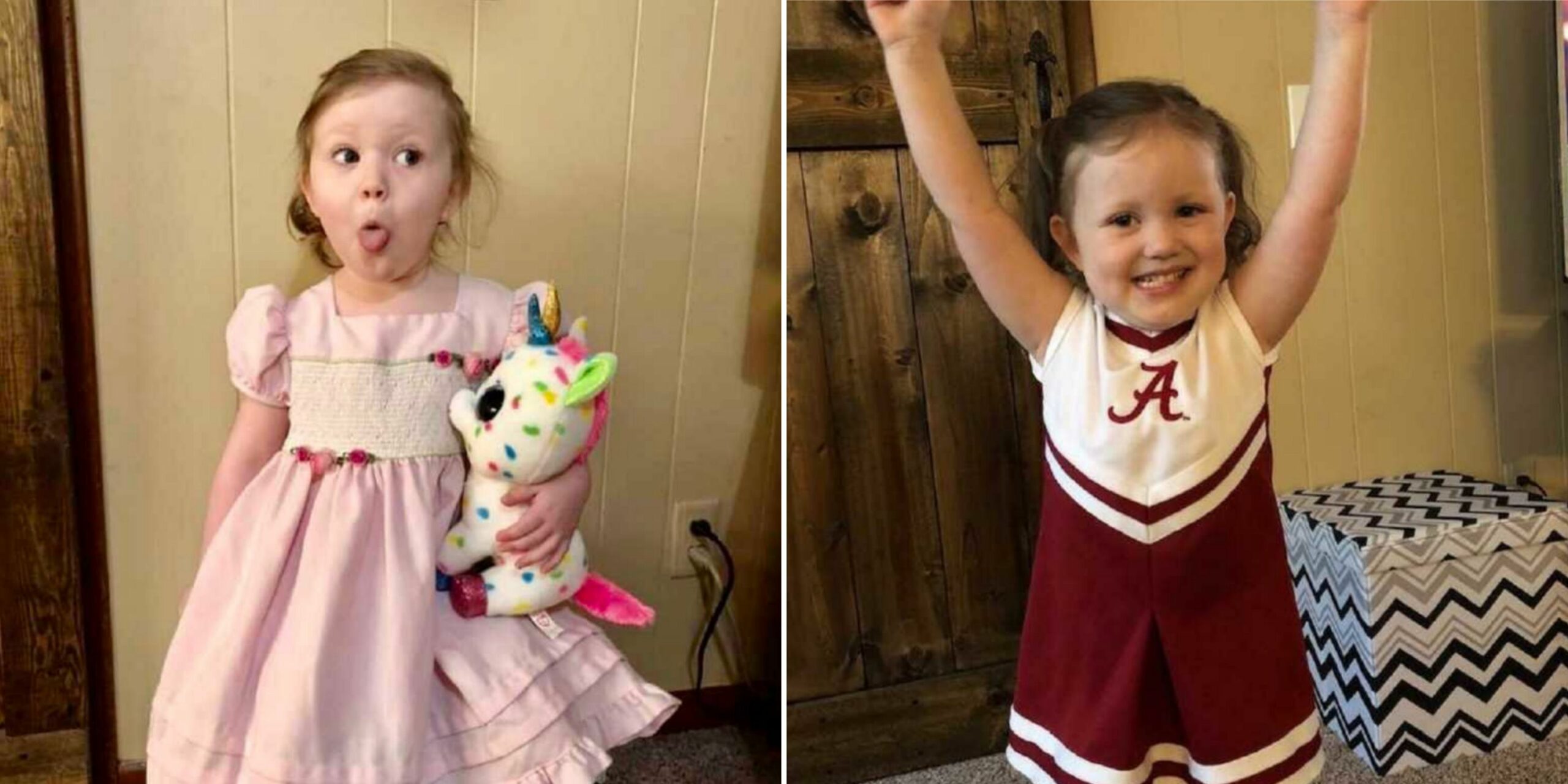
Today, Cheyenne is three years old. She goes to daycare, believes she’s a cheerleader, and fills our lives with joy and laughter. She is not yet officially cancer-free, but we trust that day will come.
Cheyenne’s journey has taught us to cherish the small moments, to live fully with our family, and to never take a single day for granted. She is our little miracle, our ray of sunshine, an inspiration to everyone she meets.