To truly understand our story, you have to know where it began. My husband Nick and I first met when we were just seven years old. Our families were connected—my mom’s brother had married his mom’s sister. Uncle Brian used to bring Nick around and jokingly say we would get married someday. As kids, we would roll our eyes and say, “Ew, no way!”—all the while secretly harboring little crushes on each other.
We could never have imagined the profound role Uncle Brian would play in our lives—or that we would lose him only seven years later, at just 33 years old.
Fast forward ten years, and Nick and I began dating. A year later, we were married. Looking back, we were far too young, but when you’re in love, logic hardly matters. Nothing could stop us.
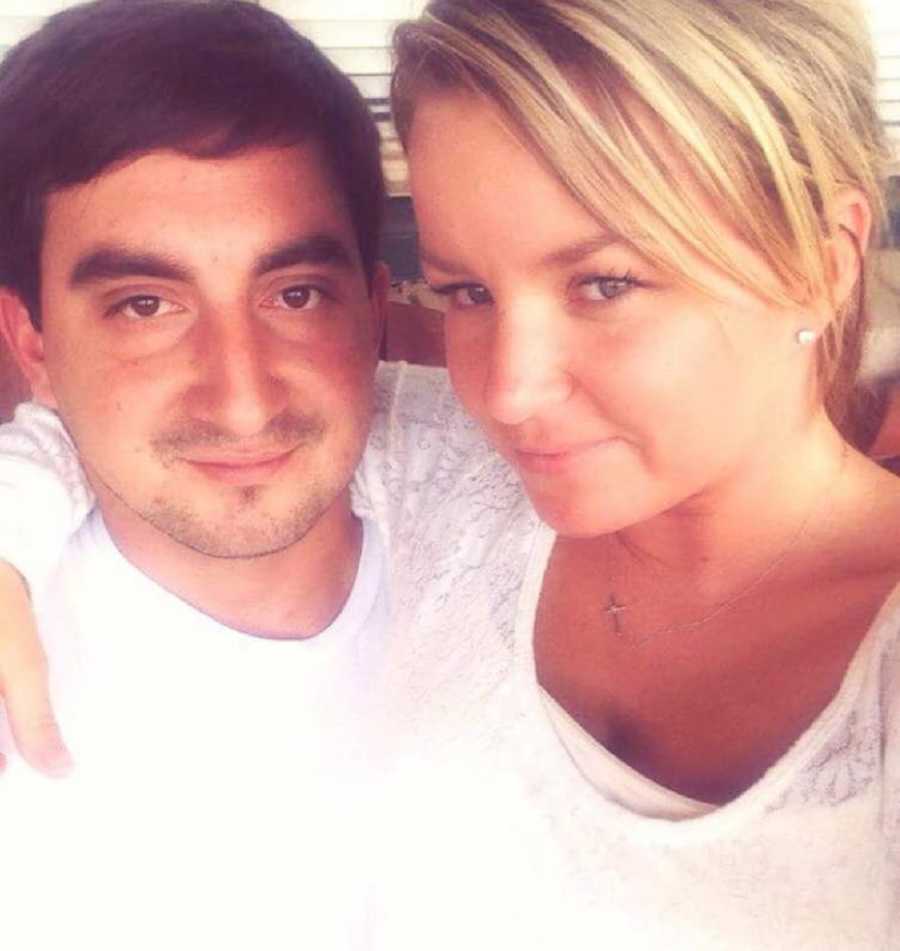
About a month after our wedding, I became terribly ill. Extreme nausea and constant vomiting left me barely able to get out of bed. A pregnancy test confirmed what I suspected: I was expecting. Soon after, I was diagnosed with hyperemesis gravidarum (HG), which explained the severity of my symptoms. I was due on my birthday, March 22, 2005. We were overjoyed.
At our first OBGYN appointment, an ultrasound revealed something unexpected. In just a few minutes, we learned we were having a baby girl—but she also had a heart defect and a cystic hygroma. Shattered doesn’t begin to describe how we felt. I cried for days.
The doctor referred us to a specialist in Shreveport, over an hour away, because my pregnancy was now considered high-risk. From that point forward, we made the three-hour round trip two or three times a week.
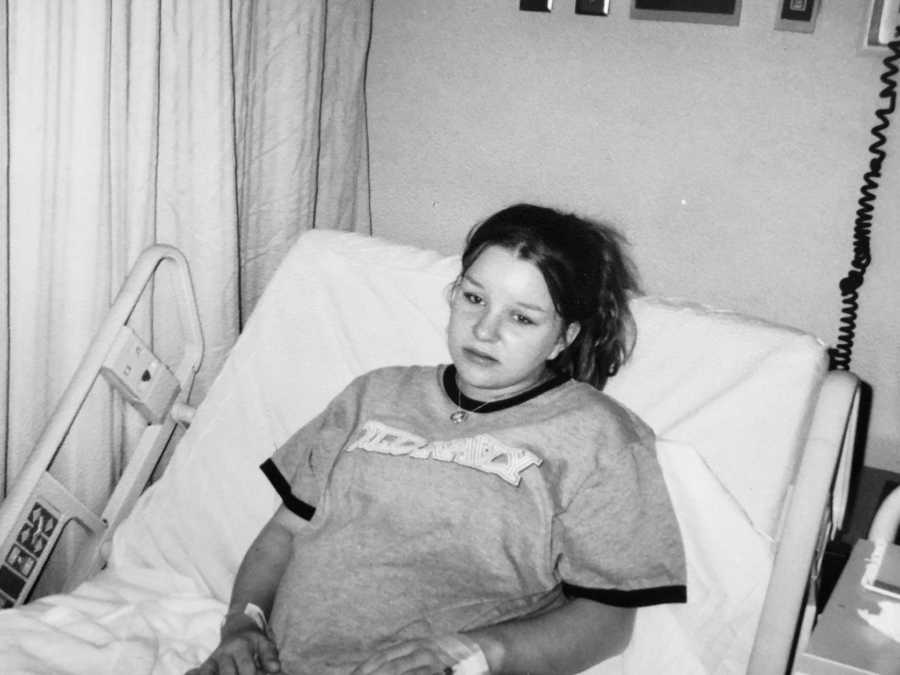
We were encouraged to undergo genetic testing, as her two birth defects were thought to be linked. The tests came back normal, giving us no answers. It was soon determined that her heart defect was Hypoplastic Left Heart Syndrome (HLHS)—something neither of us had ever heard of. The doctor told us our daughter would likely be stillborn, recommending that we consider abortion. We were devastated but unwavering. We had already fallen in love with her, and we were determined to give her every fighting chance.
Every day became a careful ritual of counting and tracking her movements, desperately hoping she was still with us. It was the most terrifying, uncertain time of our lives.
As her due date approached, we learned that our local hospital wasn’t equipped to care for a baby as fragile as ours. We were sent to Ochsner in New Orleans for the final six weeks. But after just two weeks, it became clear we couldn’t wait any longer—there was no amniotic fluid left, and the doctors couldn’t explain why.
On February 23, 2005—her great-uncle Brian’s birthday, a twist of fate—our Alexia Paige made her entrance into the world via cesarean section at 5:06 p.m. She weighed just 4 pounds, 5 ounces, and measured 17 inches. She didn’t cry, didn’t make a sound, yet she was perfect. We counted her tiny fingers and toes, marveled at her blue-green eyes, and noticed the familiar traits she shared with both of us. Miraculously, her cystic hygroma had vanished.
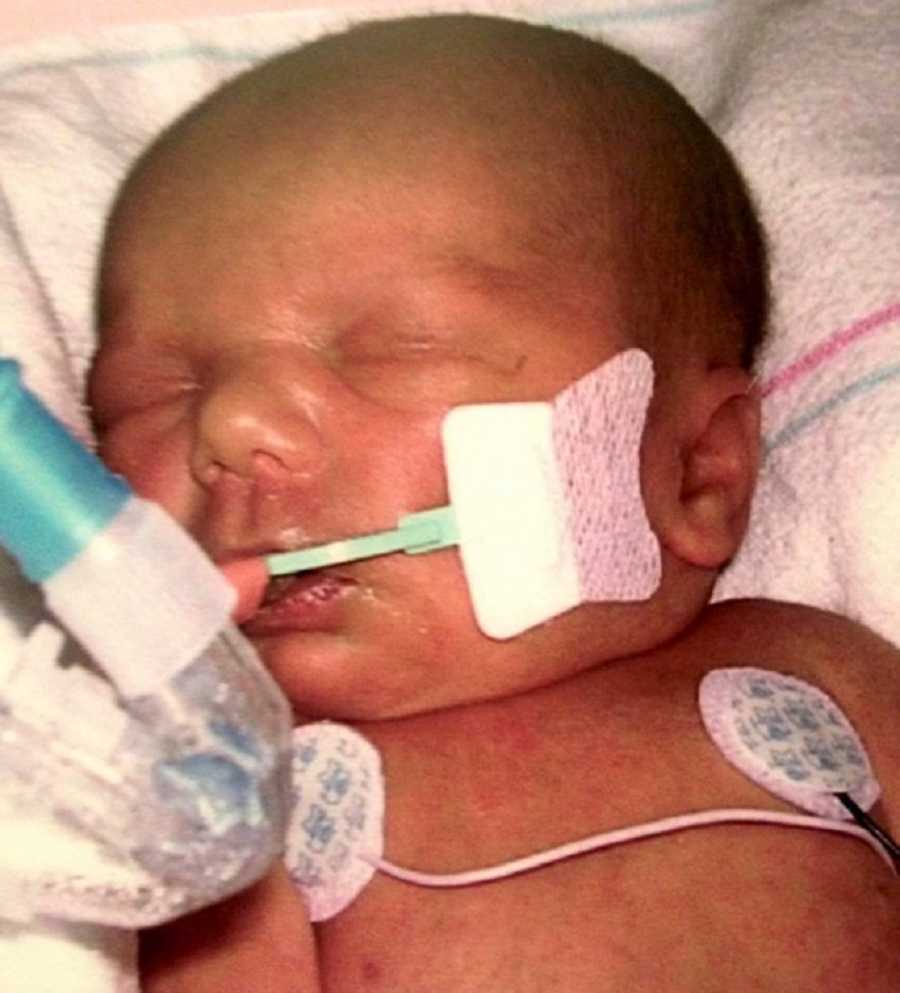
We didn’t get to hold her immediately. She was rushed to the NICU, and it would be a full day before we could finally touch our daughter. That day was the longest of my life. When we were finally allowed in, we were overwhelmed—not just with fear, but with the realization of how many families had stood where we now stood, facing heartbreak and hope in equal measure.
Lexi was hooked up to numerous machines, closely monitored by a team of specialists. Over the next week, we learned she also had pulmonary emphysema. Multiple open-heart surgeries would be required to give her a chance at life, but due to her size and fragile condition, the first surgery carried only a 30% survival rate.
We cried, we prayed, and we felt powerless. We had Lexi baptized, then watched her being wheeled into surgery, unsure if we’d ever see her again. When she pulled through, the relief was overwhelming, but the journey had only just begun.
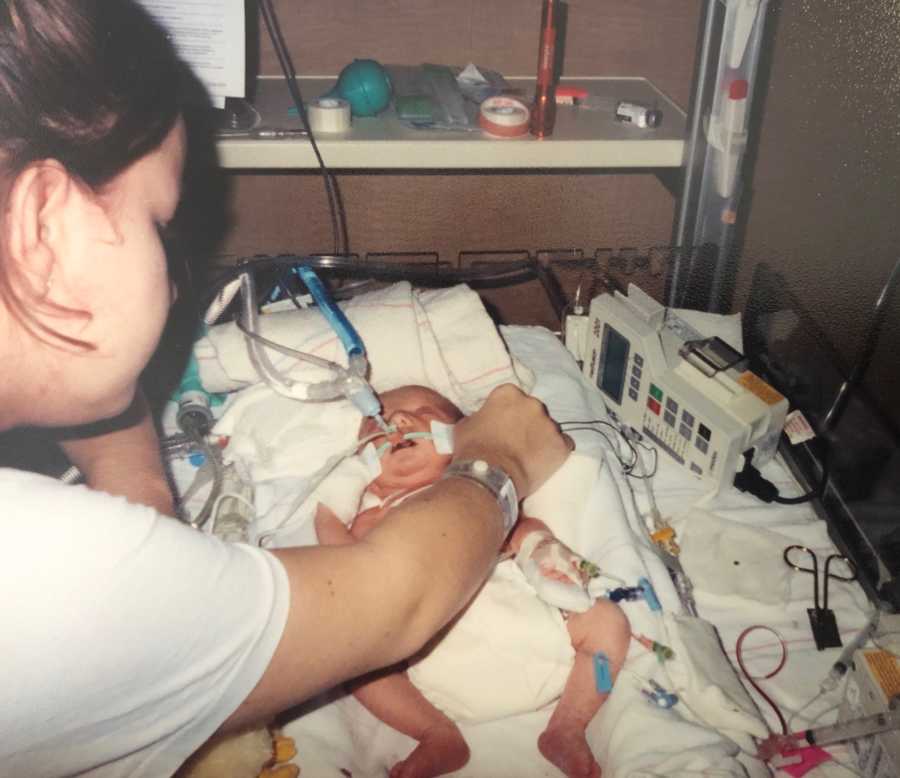
Within a day, her tiny body began to fail. Her organs were overworked, and she needed emergency surgery to drain fluid from her stomach. Tragically, the procedure perforated her bowel, causing internal bleeding and a stroke. Doctors told us she showed no signs of brain activity.
“There is nothing more we can do,” they said.
At just 18 years old, Nick and I faced the most unimaginable decision of our lives. On March 14, 2005, we removed Lexi from life support. We held her, cherished every detail of her delicate face, and felt the unbearable weight of our loss. She took her last breath in her daddy’s arms—the first and last time he would hold his daughter. The nurse wrapped her in a white blanket and handed her to me. I held her tiny hand, trying to absorb every moment. Leaving the hospital empty-handed, planning her funeral instead of a coming-home celebration, felt like surviving the impossible. My heart ached in a way I had never known.
Grief tested us. Nick and I mourned differently—I was raw and emotional, he retreated inward, trying to be the rock. It took years for him to share his pain, and for us to find a way to let our grief strengthen our marriage rather than tear it apart.
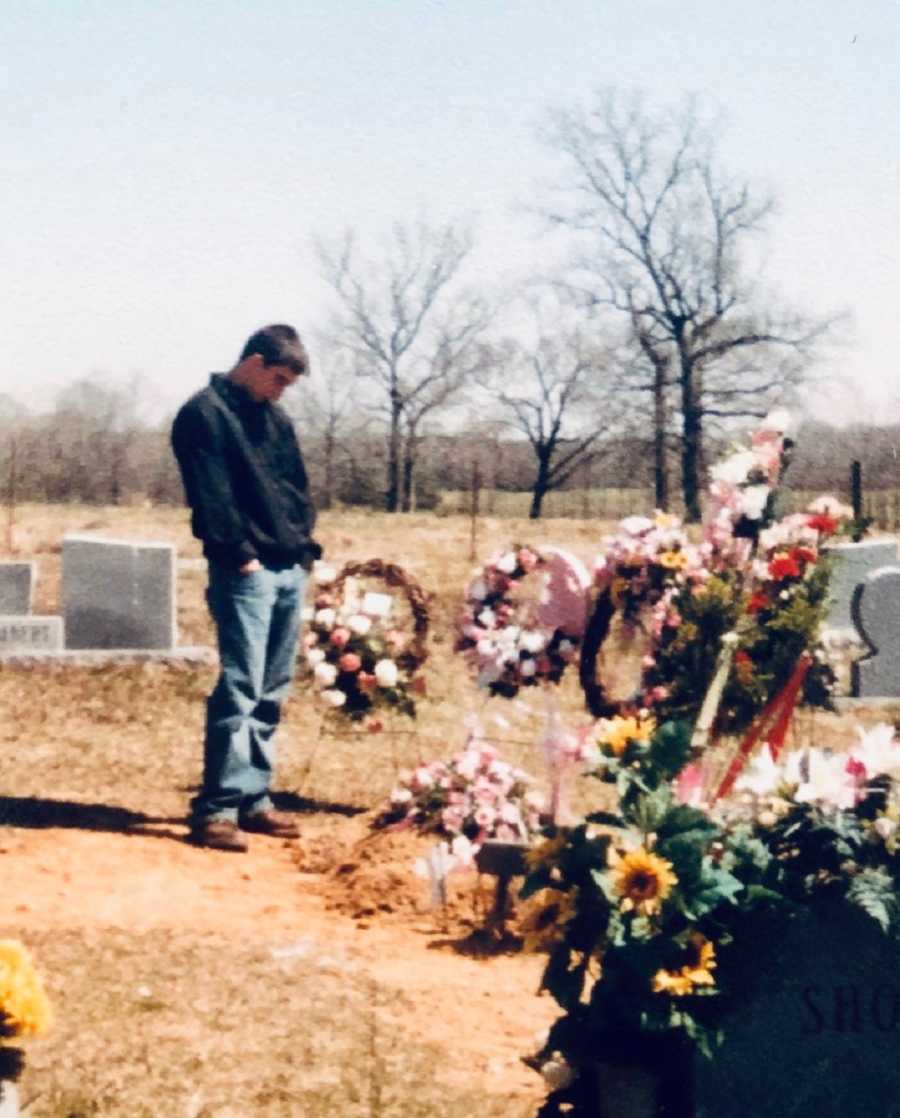
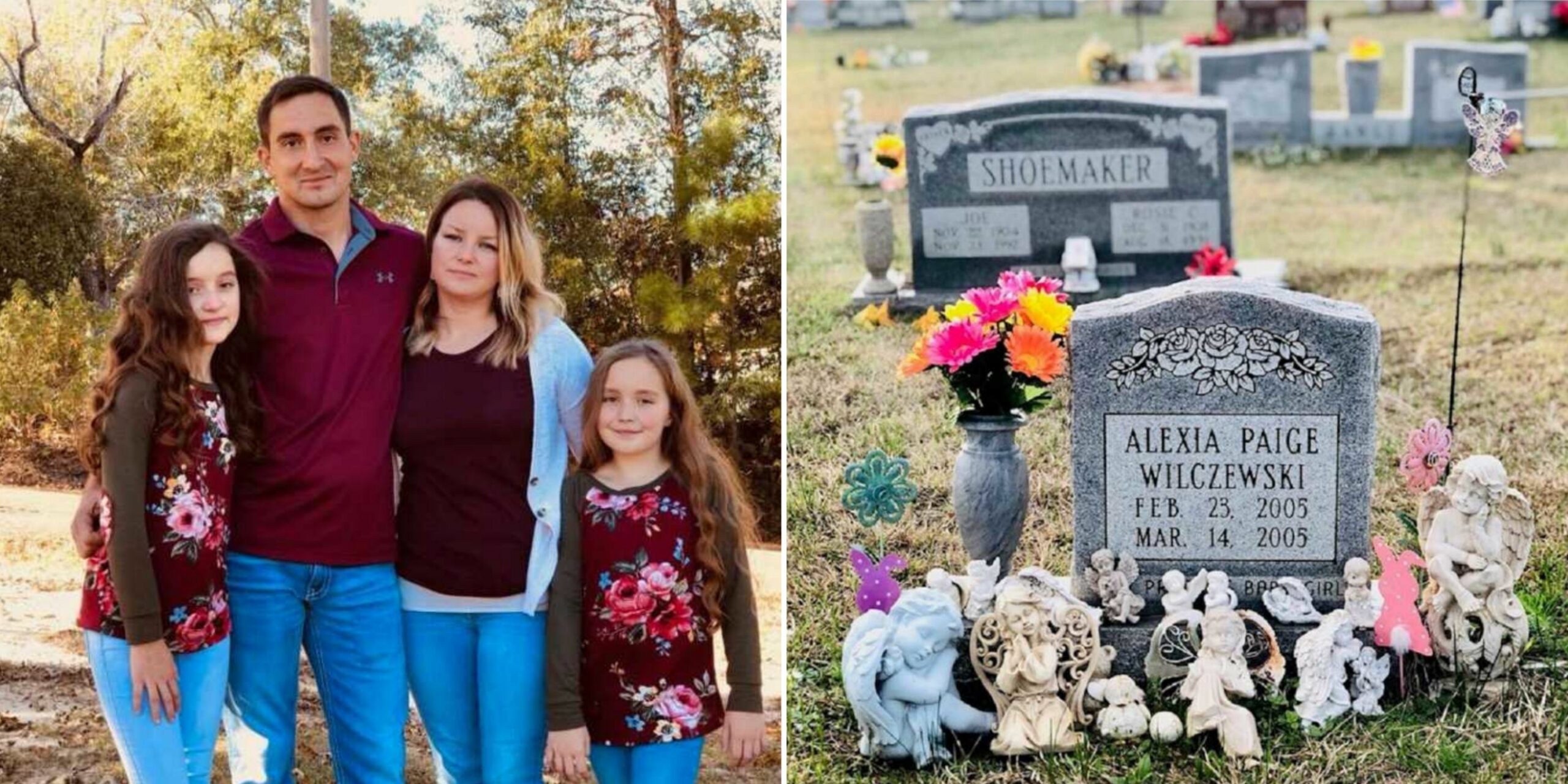
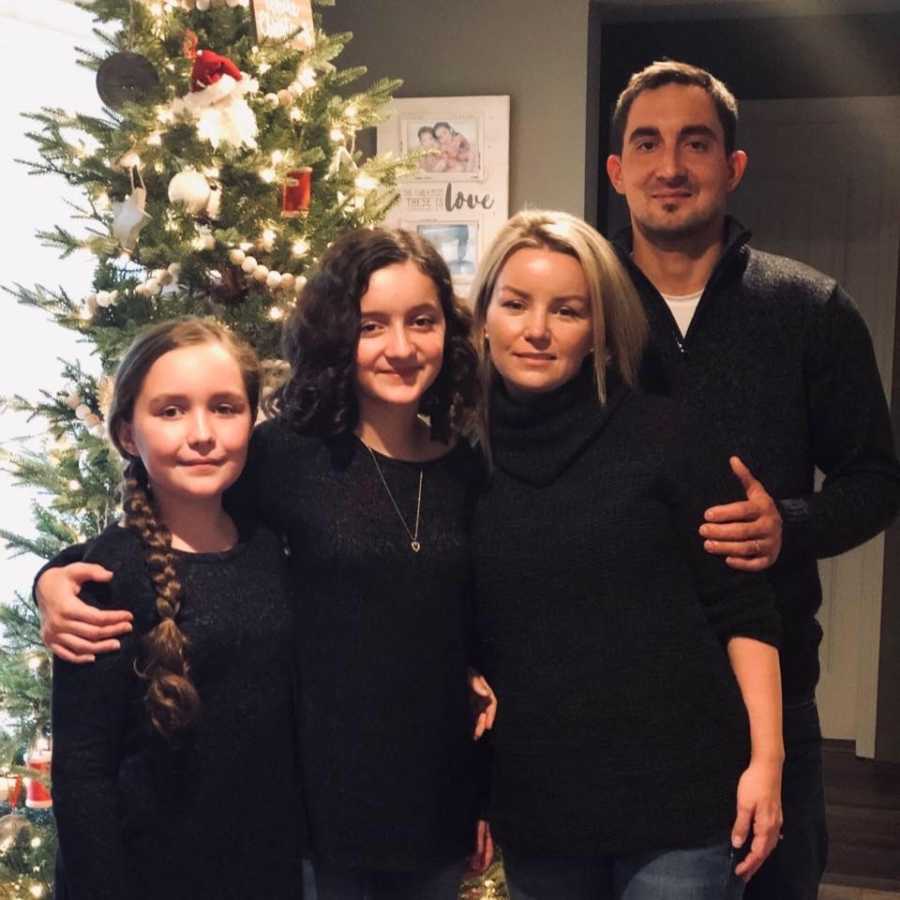
Since then, we’ve welcomed two more daughters who are our reason to love life again. But Lexi’s absence is always present—around family gatherings, Christmas mornings, milestones she will never reach. A song, a smell, a memory—each brings her back, a reminder of what might have been. Losing a child is a wound that never fully heals.
We’ve built a beautiful life together, but there will always be a missing piece. And in that space, we hold our Alexia Paige—forever loved, forever remembered.
In loving memory of
Alexia Paige Wilczewski
February 23, 2005 – March 14, 2005