The Horrific Incident
Eli was born completely neurotypical. At just five months old, his life changed forever when he suffered a traumatic brain injury caused by Shaken Baby Syndrome (SBS) at the hands of his babysitter — a family friend.
Yes, we knew her.
I was at work when I received a frantic phone call. “Eli is asleep but kicking his feet and won’t wake up.” The sitter hadn’t called for help, so I immediately called an ambulance and left work. I phoned my mom, an LPN, and asked her to meet me at the hospital. I called my (then) husband and told him to go straight there. I also called my sister and asked her to meet me at the sitter’s house to pick up my older son so he wouldn’t be frightened.
I was terrified and deeply confused. Eli had been fine just hours earlier. He was teething and a little cranky, but I had told her to call me if he became inconsolable so I could pick him up.
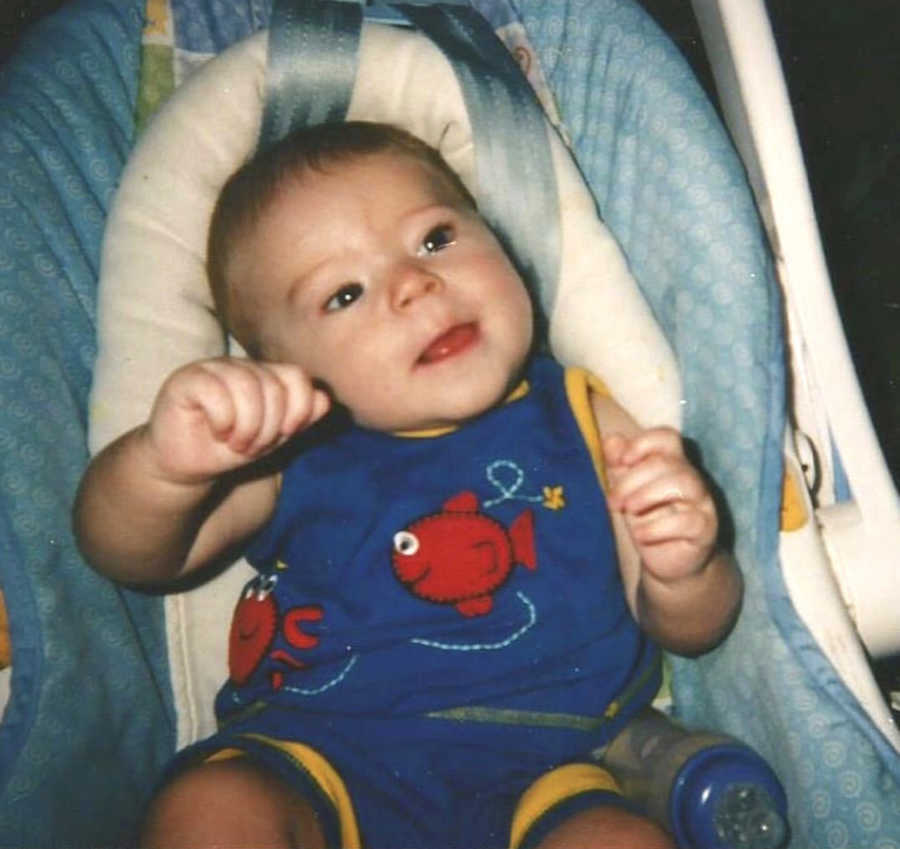
When I arrived, the ambulance had just pulled up. What I’d been told were “kicking feet” were actually seizures. Eli’s eyes were rolled back in his head. One EMT said words I will never forget: “I’ve never seen anything like this. I have no idea what’s going on.” My heart sank as I climbed into the ambulance with my baby.
Eli was rushed to our local hospital, but they weren’t equipped to handle such a severe injury in an infant. He was life-flighted to the children’s hospital. During the flight, he coded twice. He was taken straight into a nine-hour brain surgery to treat a subdural hematoma on the left side of his brain. Surgeons performed a craniotomy, removing part of his skull to relieve pressure and clear the blood that was building up.
After surgery, Eli was placed in a drug-induced coma to control seizures and reduce swelling. Two shunts were placed to manage fluid buildup.
The Truth Is Revealed
After surgery, doctors told us to call our family in to say goodbye. His chances of survival were very slim. Not long after, police arrived to question us.
“The doctors have ruled this injury as abuse.”
I was in complete shock.
Our entire family gathered that weekend — parents, step-parents, siblings, aunts. The babysitter was even there, because until the police arrived, no one had mentioned the words child abuse. We were stunned.
The idea that anyone thought we had hurt our son was devastating. It had taken over a year to conceive our first child due to health issues. We were told we’d never have another. Eli’s pregnancy had been a miracle — and now someone was saying we had harmed him.
When the sitter left briefly, my dad said firmly, “Do not come back.” We knew it wasn’t me or my husband. Eli had been fine that morning. My cousin, whose child was also watched by her, had seen him and knew he was okay.
Complications Following Shaken Baby Syndrome
Eli remained in a drug-induced coma for six weeks. During that time, he became septic due to a duodenal perforation. Doctors couldn’t say whether the tear was caused by physical trauma or occurred during life-saving measures on the flight.
They attempted to repair the perforation five times. Each time it ruptured again due to swelling and infection. Finally, they left his abdomen open, placed a mesh barrier, and used a wound vacuum to remove infection and allow healing from the inside out.
Those weeks were filled with exhaustion and heartbreak. I was separated from Evan for the first time in his life. My husband had to return to work so we could survive financially. Family rotated staying with me so I was never alone. My mom and stepmom stayed at the hospital while my mother-in-law and sister cared for Evan.
Our pastors prayed over Eli. Churches placed him on prayer lists and held a benefit to help cover the loss of my income. During this time, a gastrostomy tube was placed because doctors doubted he would ever have the cognitive ability to eat on his own.
It was crushing.
When Eli finally woke from the coma, we were told he would likely remain in a vegetative state and have a very limited lifespan. They recommended institutionalization — even securing him a spot without asking us.
I was furious and heartbroken. I asked if this was really how they prepared parents to take their children home — by telling them they couldn’t do it.
I refused. I was 21, young and medically inexperienced, but I knew one thing: we would take Eli home and give him the very best life possible, no matter how long he had.
I was terrified. What if I failed him? What if this destroyed our family? How would it affect Evan? Our marriage? Work? Life?
I had to leave my job to care for Eli full-time. His appointments were constant, often requiring travel. Evan was deeply affected — but in a beautiful way. He became protective and involved, always wanting to help.
My marriage didn’t survive. Trauma often leaves casualties, and I was consumed with caring for our children and Eli’s medical needs.
Conquering Challenges
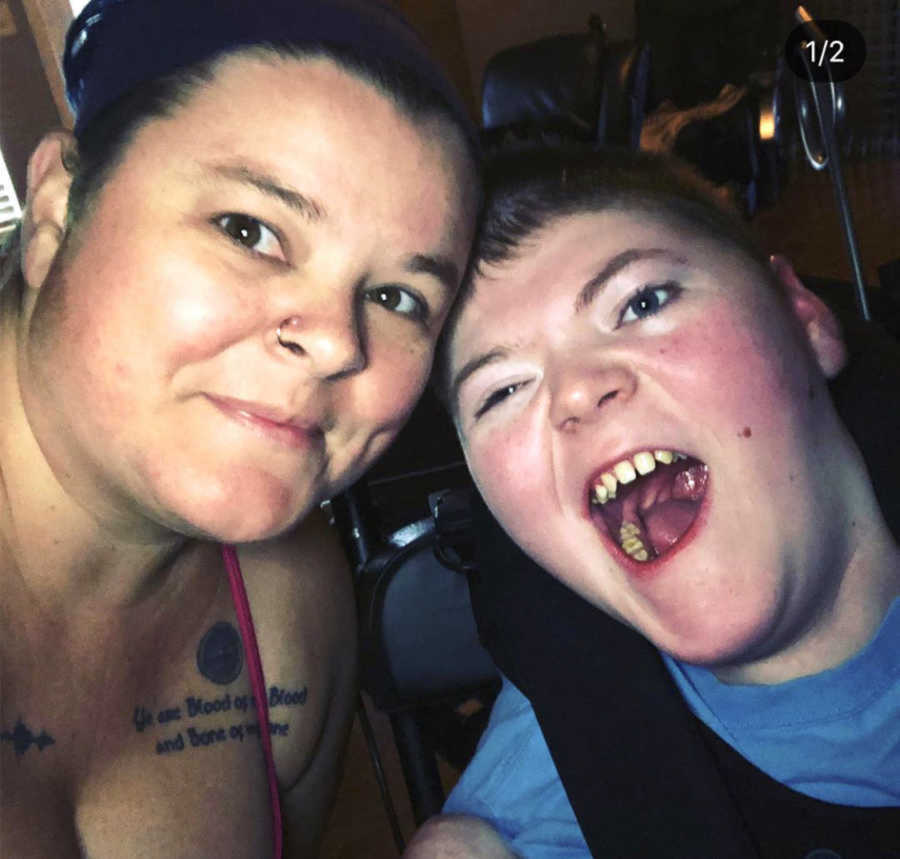
We began seeing countless specialists. Seizures became one of our biggest battles. Eli experiences multiple types — absence, focal, myoclonic, atonic, tonic-clonic — along with “neuro storms,” chaotic brain activity, especially at night.
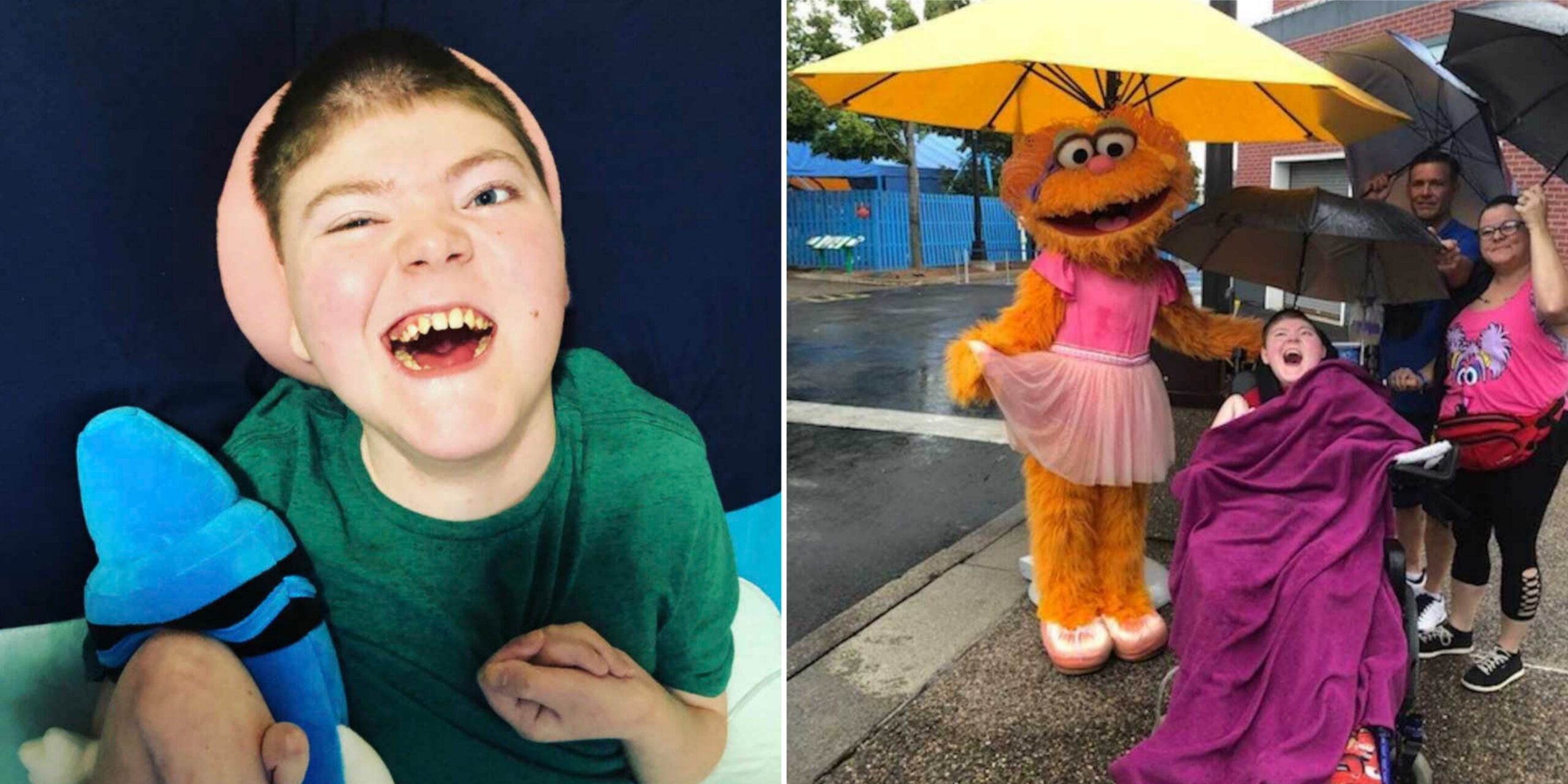
Eli has global brain damage affecting every aspect of his life. At 16, his cognitive level remains that of an infant. He is fully dependent, has no head or trunk control, and is nonverbal.
He has quad spastic cerebral palsy, laryngomalacia, central and obstructive sleep apnea, scoliosis, cortical visual impairment (he is legally blind), osteoporosis, acquired polycystic kidney disease, neurogenic bladder, hip dysplasia, and countless other diagnoses.
It’s as overwhelming as it sounds.
He was considered failure-to-thrive until age eight, when a baclofen pump was implanted to control severe muscle spasms. He has spinal rods to prevent organ compression, has undergone multiple hip surgeries, had hardware removed due to osteoporosis, and eventually had the top of his femur removed with radiation to prevent regrowth.
Eli has endured 47 major surgeries, countless minor procedures, sees 25 doctors regularly, takes 11 daily medications, and relies on multiple medical devices.
The hardest part is knowing this never had to happen. One phone call — just one — could have changed everything.
Despite it all, Eli is relatively healthy today because of excellent medical care and relentless advocacy.
Life After the Incident
When I brought Eli home, I immersed myself in research. I changed hospitals, moved states for better access to care, and found online communities of parents like me. In the early 2000s, Yahoo groups became my lifeline. Other mothers taught me how to fight, question doctors, advocate fiercely, and never give up.
Some of those women remain family to us.
Eli’s abuser was never charged. She never spent a night in jail. Files were “lost” after Katrina. I was told by an assistant DA, “This is none of your business. You aren’t the victim.” Letters to the attorney general and governor went nowhere.
She lives freely. We live with the consequences every day.
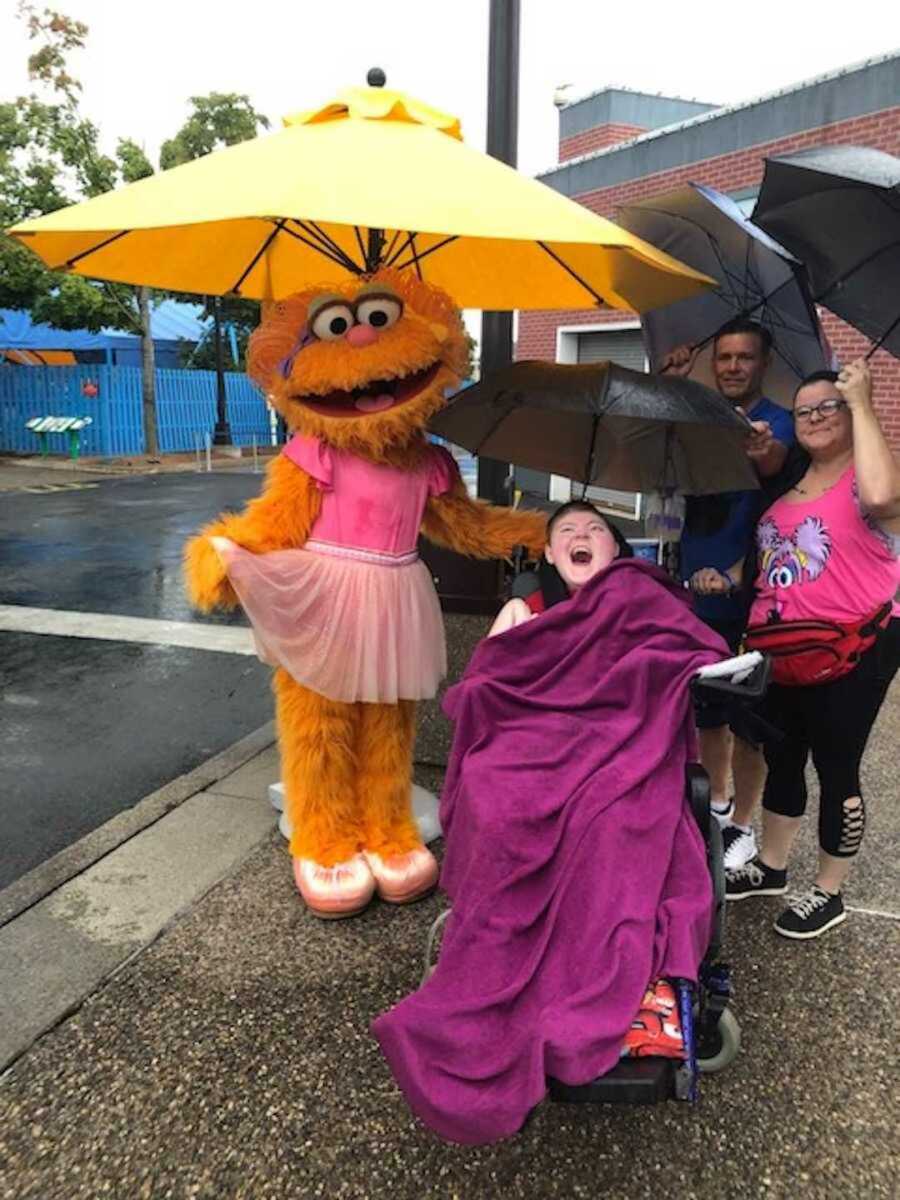
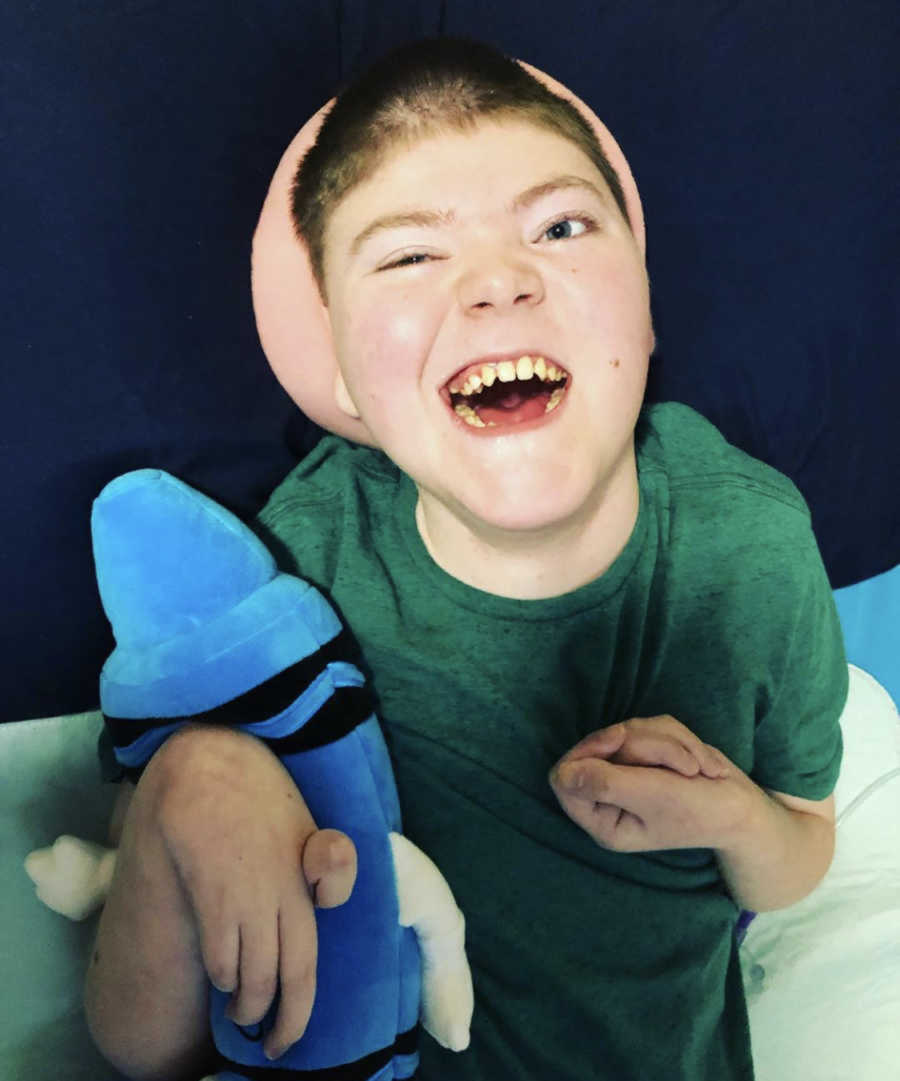
Still, we strive to give Eli a joyful, full life. We travel, create experiences, and surround him with love. He is cherished by me, his stepfather Billy, his brother Evan, and a community that has become family.
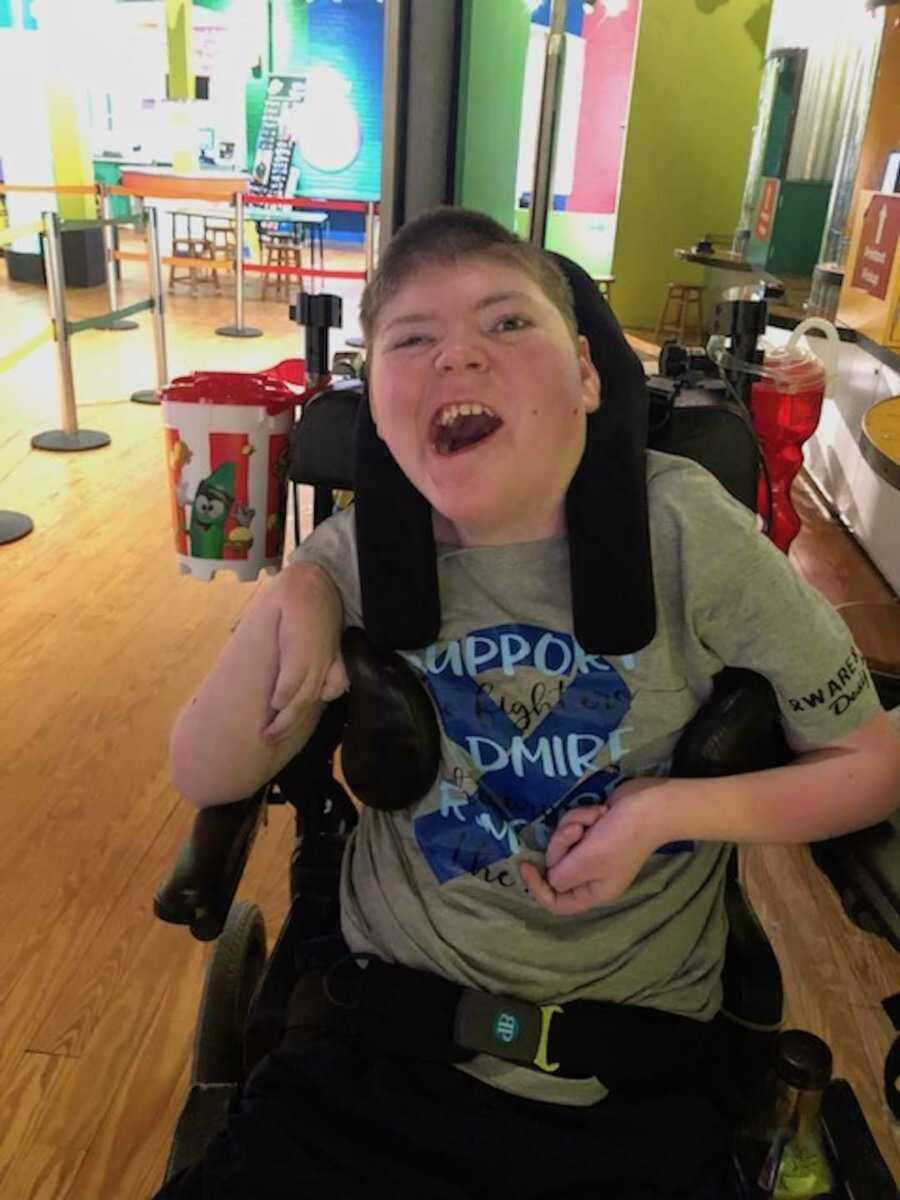
From tragedy came purpose. We now support other families affected by child abuse and SBS. I mentor parents, helped create support groups, and co-founded the Blue Ribbon Initiative to advocate for stronger child abuse laws and a national abuse registry.
To parents walking this path: hold onto your faith. Find those who understand. We see you. We know the pain.
I may never see Eli live independently. I may outlive him. But while he’s here, he will know nothing but love, care, and belonging.
He is my forever baby.
And he is my joy.