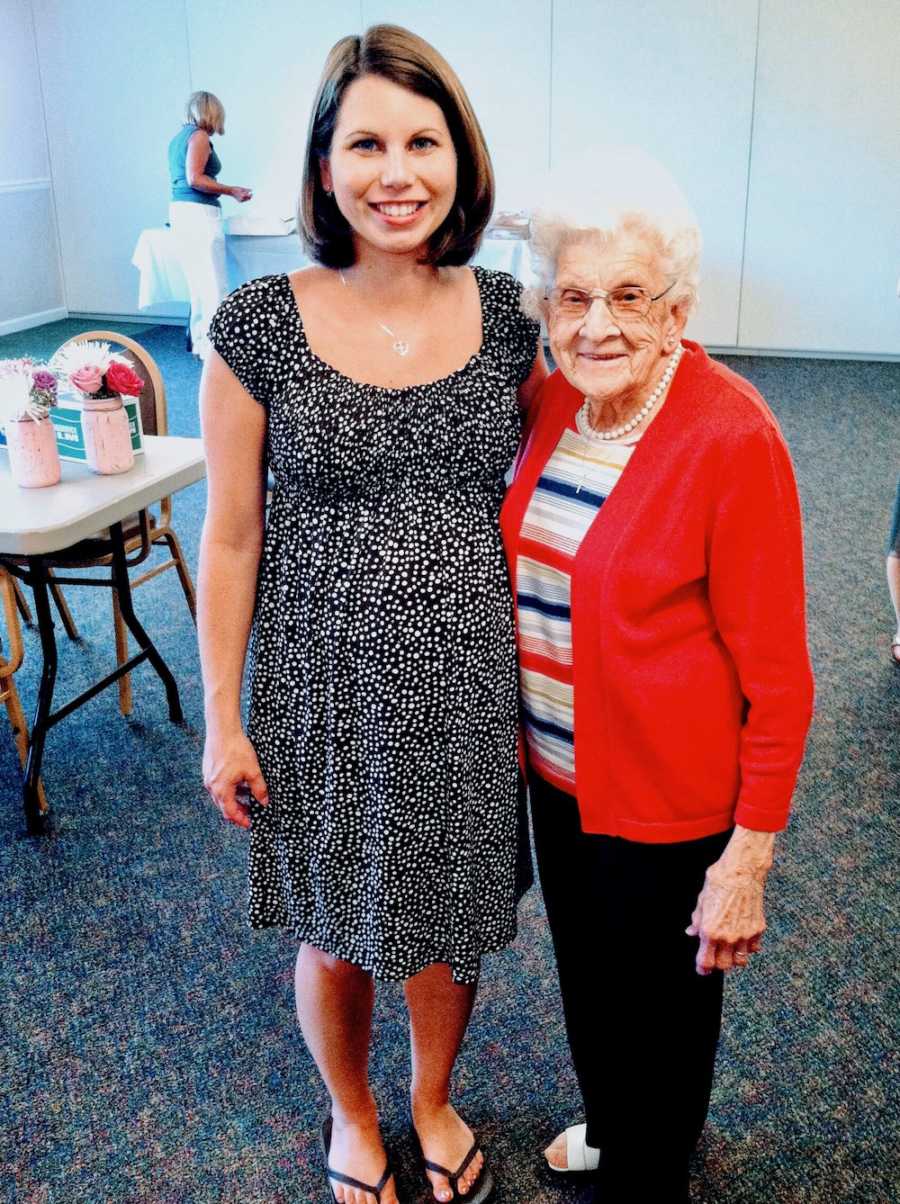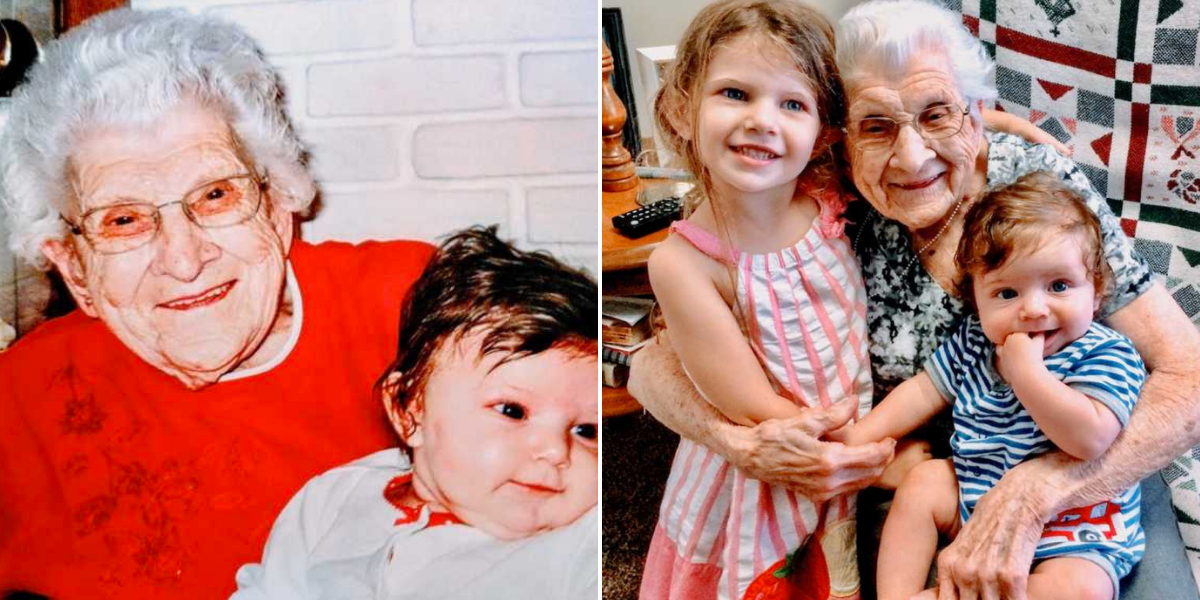
Almost thirteen years ago, I started dating Matt, my future husband, and quickly learned that he lived with his grandmother. Before I met most of his family or friends, I had the privilege of meeting Nana. She was a spry 85-year-old, completely independent, endlessly optimistic, and always happy to welcome me—with a plate of food in hand. Early on, when I stayed over occasionally to avoid a late drive back to my university, I always insisted on sleeping on the couch, not wanting Nana to think less of me. Several months into our relationship, she quietly bought new sheets and extra pillows for Matt’s bed—point taken!
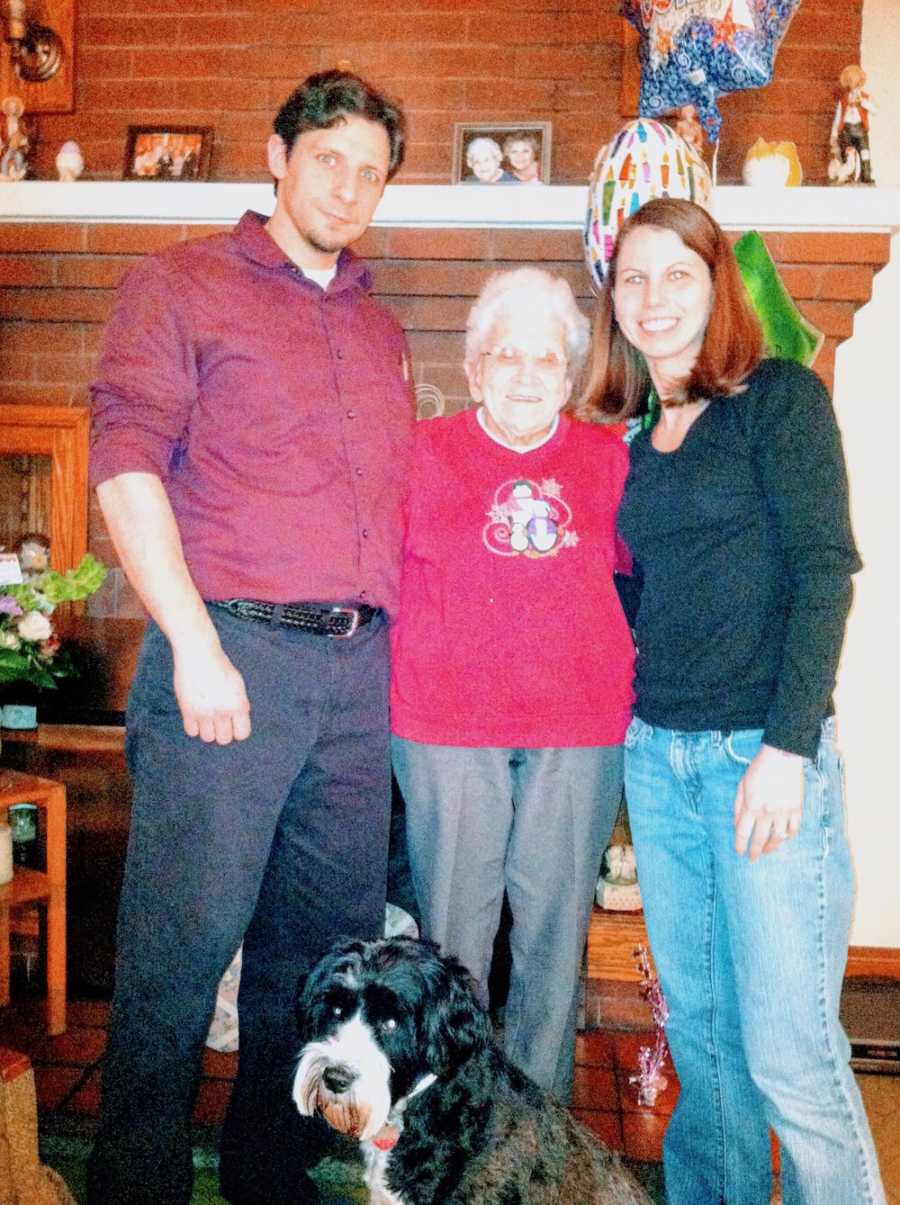
During my clinical rotations, I was living back at home when my dad died unexpectedly. I spent most weekends in Altoona at Nana’s, and her home became a haven during those difficult months of grief and adjustment. She always greeted me with a warm hug, asked how I was really doing, and reminded me that she was praying for my mom and me. I remember accidentally backing my car over her gorgeous peonies—ready to cry, I stepped out, and she laughed, saying, “Good, I needed to cut those back anyway!” Another time, I took her shoe shopping at Kmart. She briskly walked through the store, tried on a pair of flats without ever sitting down, bought them in two colors, and the whole trip took maybe 10 minutes. She chuckled, saying she’d been buying the same shoes for ten years but needed to make sure her feet were still the same size.
Eventually, Matt and I moved into our own home—just a mile from Nana’s by back roads—and we often walked over to visit her. I treasure the countless conversations we had, sometimes uncomfortable at the moment but priceless in hindsight. We talked about life, loss, faith, and God. When I went through my third miscarriage, she shared her own losses with misty eyes. By then, at age 97, she sometimes confused people and places, but that day she looked me straight in the eye and said, “Are you okay? I know what it’s like to tell people you’re okay, when you really aren’t.” As we watched family members grow ill and eventually pass, she confided, “I don’t want to be sick in the hospital. I hope someday I just go to sleep and wake up in heaven.”
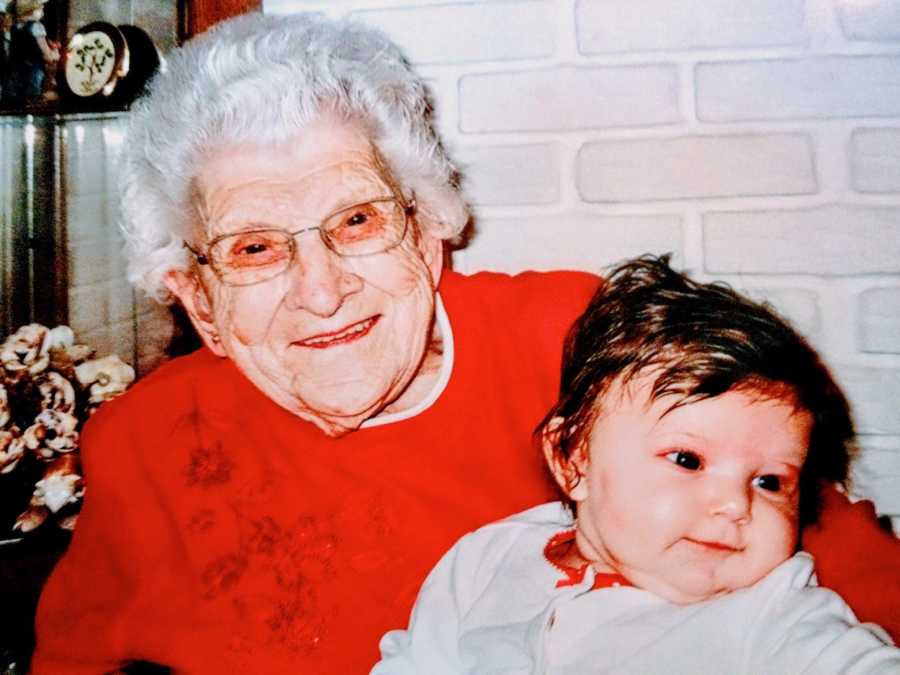
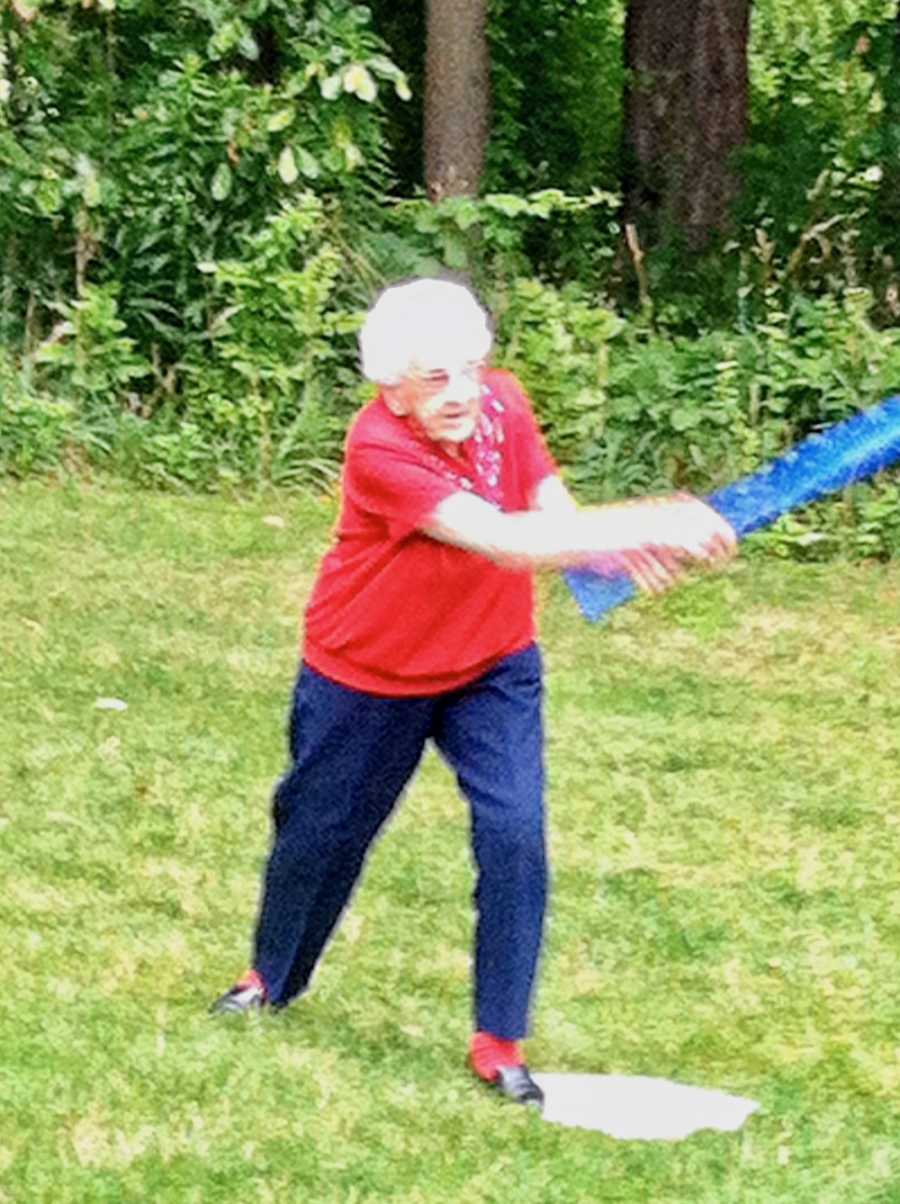
For more than a decade after I met her, Nana remained her spunky, independent, unstoppable self. She could beat me at washers, managed to hit the ball twice at a family wiffleball game, and even chased my daughter Lena around the yard—running—in her late 90s. She maintained a three-story house by herself up until just two years ago. Even recently, she knew our kids’ names, lighting up and declaring, “Lena girl!” during our visit, even though she was clearly not herself. She rarely complained, never needed medication until very late in life, and approached every day with quiet strength and positivity. If she ever grumbled about anything, usually the weather, she would quickly shrug it off and move on. Her outlook on life never ceased to amaze me, and she has been a true role model.
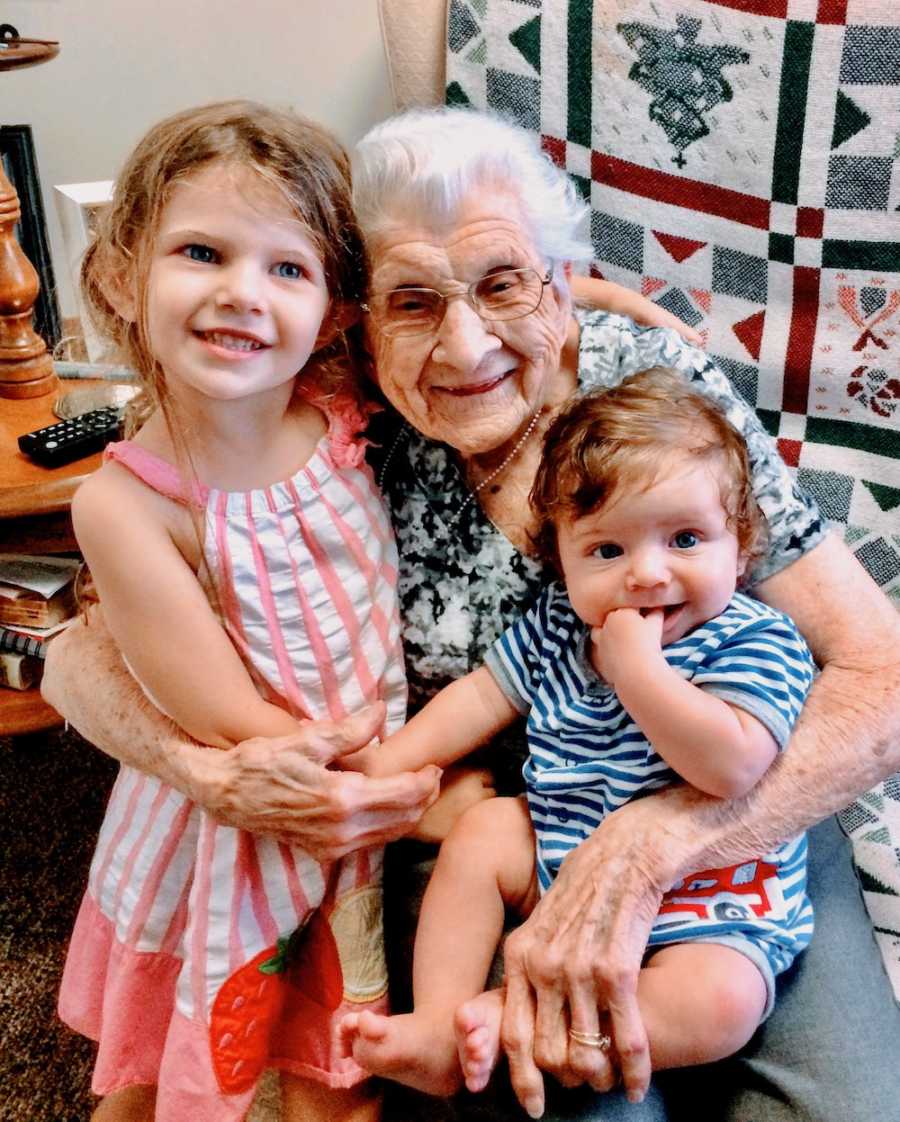
It’s strange to think that I’ve known her for more than one-third of my life, yet it was just a small fraction of hers. To my husband, his parents, and his sisters, I’m so sorry for your loss, and I am grateful beyond words for the gift of knowing Nana all these years. Nana woke up in heaven today—I’m certain of it. Rest in peace, Nana. We love you.