The statistics for foster youth aging out of the system can be overwhelming—and often disheartening. I heard them over and over. I entered the foster care system permanently at twelve years old. By the time I turned fifteen, people around me began expressing their concerns: that I might not graduate high school, that steady employment would be out of reach, and that I might become pregnant or incarcerated before turning eighteen. I desperately wanted to defy those expectations, to not become just another statistic. But I couldn’t shake the fear that the odds were stacked against me—until someone told me I didn’t have to be defined by them.
Between the ages of twelve and eighteen, I lived in roughly twelve different homes, each move chipping away at the sense of stability most kids take for granted. I had few consistent adults in my life. Luckily, my caseworkers kept me in the same school district despite the frequent moves. I attended the same school for three years—a rare gift for a foster youth constantly relocating—and that stability introduced me to someone who would change my life: Scott.
Scott became my track coach during my sophomore year of high school. I struggled with emotional outbursts during practice, often lashing out in frustration. Unlike others, Scott never judged me or held my mistakes against me. He forgave, encouraged, and challenged me to believe in myself.
The summer between my junior and senior years, on a sweltering day, I practiced sprinting out of the blocks. Track had become my refuge, a way to escape the loneliness of my foster home. Scott gave feedback throughout practice, and as I walked back to my blocks from the 50-meter mark, he casually said, “I think you can win state.” Then he paused, taking a deep breath. “If you do what I say.”
I had never qualified for a state championship meet in an individual event. Yet, stubbornly, I thought, I will do everything he says, and if I don’t win, it’s his fault. I didn’t yet believe in myself as he did—but I would soon learn to.
For an entire year, I followed every workout he prescribed. I showed up to every practice, even when no one else did. Those one-on-one moments allowed us to form a bond rooted in trust and authenticity. In my last foster home, I lived with a single mother, which meant I had never had a steady male role model. Having Scott believe in my potential, consistently and unconditionally, changed everything. For the first time, I began to see my own worth and capabilities.
Scott’s devotion was unwavering, father-like. I sought his guidance not just as a coach but as a dad, someone who would champion me even when I struggled to champion myself.
When I turned eighteen, I emancipated from the foster care system and faced homelessness. I bounced from couch to couch, floor to floor, relying on the kindness of others to get by. Despite the chaos, I still made it to track practice every day. Scott often drove me to wherever I was staying that night, ensuring I could keep pursuing my goals.
One day, during a drive, Scott offered me a forever home. He had asked his daughters, who eagerly welcomed me into their family. “You can come back for holidays. You’ll always have a home with us,” he told me. I felt like I was on top of the world.
Weeks later, I stood atop the podium at the state championship meet in Ohio—not once, but four times. I became the 50th girl in Ohio history to win four state titles in a single meet, the first woman, and the first person of color from my high school to achieve a state championship title. For the first time in my life, I felt like I truly had a home and a family cheering me on.
After the meet, emails flooded my inbox with scholarship offers I hadn’t even applied to. I accepted a full-ride track and academic scholarship and began college knowing I had a support system that would always welcome me home. Scott included me in holidays, hanging stockings and buying meaningful gifts, and his daughters, Madison and Emma, became sisters in every sense of the word.
During my first year of college, we explored adult adoption. While legal fees made formal adoption difficult, Scott and his family committed to me by sharing their last name. After a brief court hearing, I proudly took on their name, forever symbolizing the family that had chosen me.
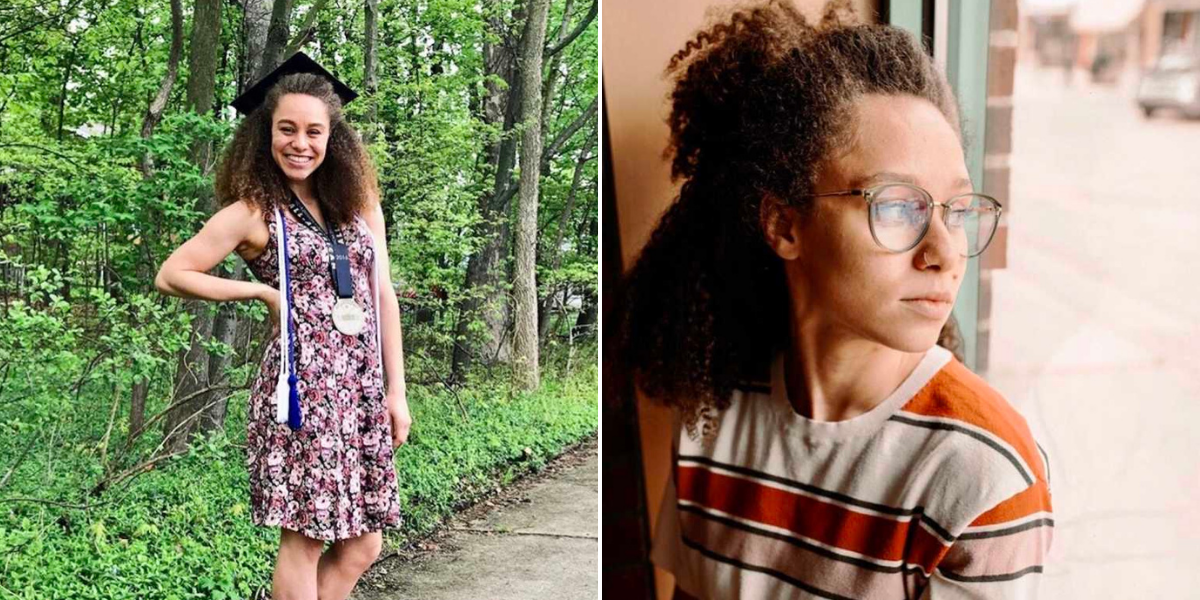
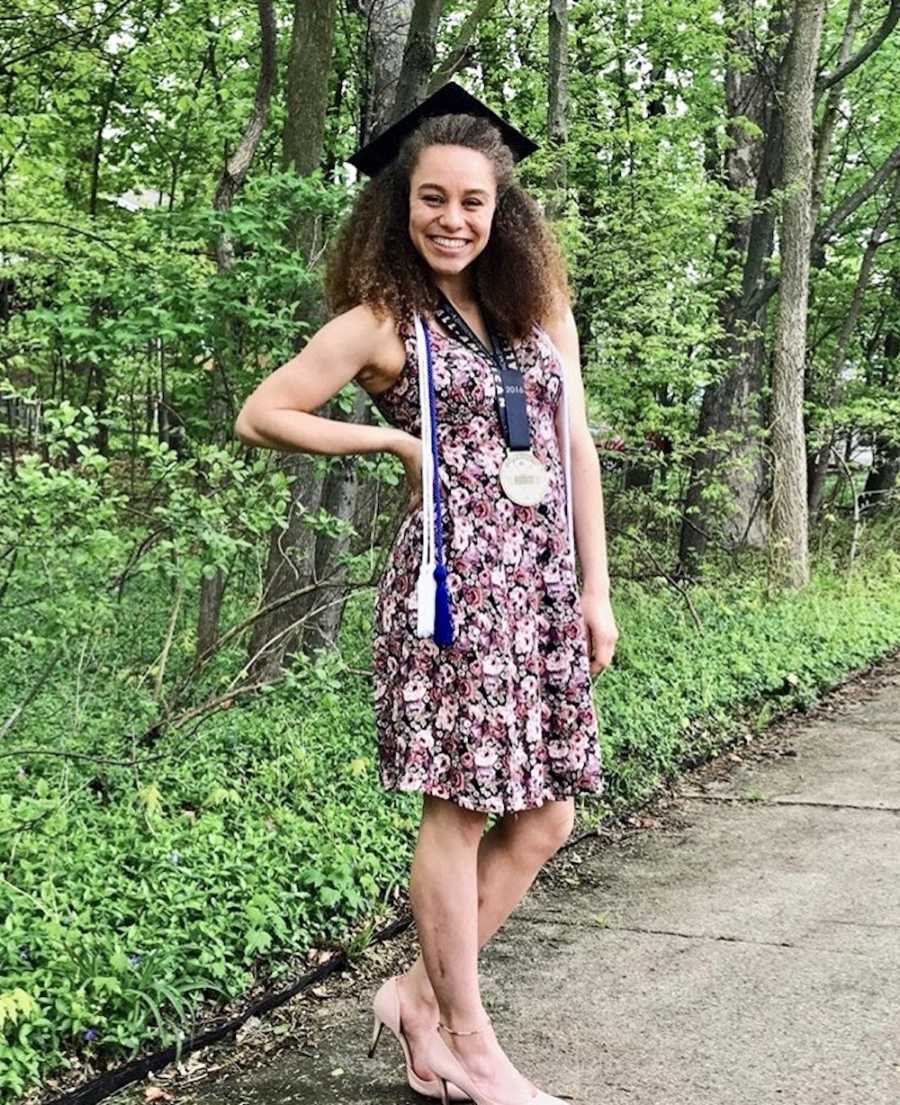
Scott’s belief in me fueled my achievements. I became a Division 2 All-American on the 4×400 relay and, in 2018, joined the 3% of foster youth who graduate college with a bachelor’s degree. A week after walking across the stage at my college graduation, Scott walked me down the aisle to give me away to my husband—a full-circle moment I will never forget.
The trajectory of a life can change with someone who simply whispers, “You are capable and worthy,” even when the world seems to say otherwise. It takes showing up consistently, fighting for someone’s potential, and demonstrating that they are worth the time, effort, and love. Youth don’t just need adults. Adults need adults, too. Commitment and guidance are lifelong, and love, once given, has no expiration date.